Categories
Fox News

Kevin McCarthy gives stark warning: ‘This will break America’

Residence minority leader reacts to Biden's costs bill on 'Kudlow' #FoxBusiness

Register For Fox Organization!
Enjoy a lot more Fox Service Video Clip:
Watch Fox Company Network Live:

FOX Business Network (FBN) is a monetary information network providing real-time info across all platforms that impact both Main Street as well as Wall Surface Street. Headquartered in New York City– the business resources of the globe– FBN introduced in October 2007 as well as is among the leading company networks on television, having covered CNBC in Company Day customers for the second successive year in 2018. The network is readily available in almost 80 million homes in all markets throughout the USA. Possessed by FOX Company, FBN is an unit of FOX News Media and also has bureaus in Chicago, Los Angeles, as well as Washington, D.C.

Comply With Fox Business on Facebook:
Adhere To Fox Organization on Twitter:
Comply With Fox Business on Instagram:

Categories
Diamond

22 Jewelry Gift Ideas For All You Big Spenders: The $2500+ Gift Guide

If you are reading this gift guide, you already know that buying jewelry is an investment you make for yourself or whoever you are buying for. After the tumultuous past two years, everybody deserves to treat themselves to something nice this holiday season. In terms of diamonds, these precious stones appreciate over time.


Categories
Fox News

Kudlow: Playing this card is not going to work

FOX Organization host supplies insight on the economy and also reacts to Head of state Biden's require a spending bundle on 'Kudlow' #FoxBusiness #Kudlow

Sign Up For Fox Service!
Watch much more Fox Company Video Clip:
Enjoy Fox Service Network Live:

FOX Company Network (FBN) is a monetary information network providing real-time information throughout all platforms that affect both Main Road and also Wall Surface Road. Headquartered in New York– business resources of the world– FBN released in October 2007 as well as is one of the leading company networks on tv, having actually topped CNBC in Business Day audiences for the 2nd successive year in 2018. The network is available in almost 80 million houses in all markets across the United States. Owned by FOX Corporation, FBN is a device of FOX Information Media and also has bureaus in Chicago, Los Angeles, and also Washington, D.C.

Adhere To Fox Organization on Facebook:
Comply With Fox Organization on Twitter:
Comply With Fox Company on Instagram:

Categories
Silver

Congress May End the Backdoor IRA Conversion—Here’s What You Need to Know.

Saving for retirement isn’t just about ourselves—it’s also about creating a legacy that can be passed on to our loved ones. Thankfully, many different avenues and options are available to us as we build our retirement portfolios—so when one option is no longer available to us, we gain the opportunity to reevaluate our strategy and explore other options that may still help us realize our long-term goals.

For example, the House of Representatives recently passed a version of President Biden’s Build Back Better bill—a sweeping piece of legislation that includes funding for pandemic relief, infrastructure, social services, and more. One piece of this legislation calls for an end to the so-called “backdoor Roth IRA conversion.”

According to a November 30, 2021, article by CNN, “Starting next year, the House-passed bill would prohibit all taxpayers from converting their after-tax contributions using this ‘backdoor’ conversion method to a Roth IRA.”

As of this writing, the House version of the Build Back Better bill has not passed the Senate or been signed into law. But even if it fails to become law, it brings up an interesting question: What would happen if one of our retirement options suddenly became unavailable, and where else can we look for ways to preserve or even grow our wealth?

A backdoor Roth IRA conversion can provide tax-free growth to those typically unable to contribute to Roth IRAs. That may soon change.

Broadly speaking, a Roth Individual Retirement Account (IRA) allows you to contribute after-tax dollars, which then grow tax-free and can be withdrawn tax-free once you retire with no required minimum distribution (RMD). By contrast, a traditional IRA allows you to make pretax contributions, but withdrawals are then taxed.

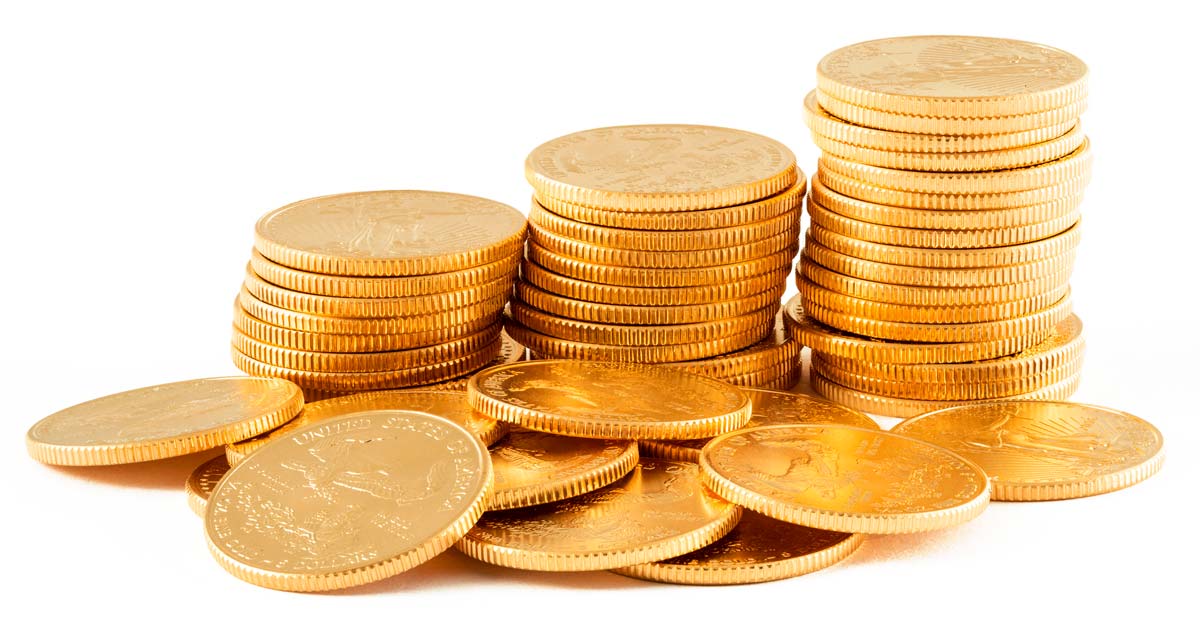
American Gold Eagle coin stackCurrently, only those whose modified adjusted gross income is less than $144,000 ($214,000 if filing jointly) are allowed to contribute to a Roth IRA. However, a “back door” exists whereby high-income earners can still contribute indirectly to Roth IRAs by contributing to a traditional IRA and then immediately converting that traditional IRA to a Roth IRA. A similar conversion method can be used to put 401(k) funds into a Roth 401(k) account.

There are several benefits of putting money into a Roth IRA. According to a November 22, 2021, article by Investopedia, some may seek out this option to “save tens or even hundreds of thousands of dollars on taxes over the years.” Investopedia continues by saying that since Roth IRAs have no RMDs, “you can leave your money in your Roth for as long as you want, which means it can keep growing indefinitely.”

If the House-passed Build Back Better bill passes the Senate and is signed into law, it may remove some of your tax-deferred options when it comes to building your retirement portfolio. But don’t forget—whether this happens or not, you have many other IRA options to explore.

You have other ways to experience the benefits of an IRA.

If you’re looking for additional ways to experience the benefits of an IRA, one option you may wish to explore is a self-directed IRA. This type of IRA allows you to receive the same tax advantages as with a conventional IRA but throws open the doors of possibility when it comes to choosing your assets—and it allows you more direct control over your asset mix.

For example, with a traditional IRA, your custodian generally presents you with a limited number of assets to choose from, such as stocks, bonds, or exchange traded funds (ETFs). But with a self-directed IRA, you can include alternative assets like real estate, cryptocurrencies, or physical precious metals like gold and silver. Since you’re able to diversify with more assets (and more asset classes), this type of IRA may help you reduce your overall risk exposure and provide you additional opportunities for upside potential.

The popularity of self-directed IRAs has been growing. On August 14, 2021, Forbes wrote, “In less than 50 years, the self-directed IRA has become the most popular way for retirement savers to [move] their retirement funds into IRS-approved alternative asset[s]…. With Americans having over $35 trillion in total retirement funds, the future growth potential of the self-directed IRA industry is significant.”

We’ve seen some of this growth firsthand at U.S. Money Reserve. This past year, our IRA division was one of our organization’s fastest-growing sectors, with more and more of our clients looking to take greater control of their retirement strategy. But everyone’s financial situation is unique, and it’s important that you take the time to understand all your options so you can make educated decisions regarding your portfolio.

Many experts point to diversification as a key element of portfolio management.

It’s possible that with the passing of the Build Back Better bill, Americans may begin looking for new ways to save for retirement as well as new ways to experience the benefits of IRAs. And that’s not a bad thing—retirement is, after all, a long-term goal, and we may need to reexamine our strategies from time to time, explore alternative options, and make adjustments to our portfolios as our unique situations change.

The post Congress May End the Backdoor IRA Conversion—Here’s What You Need to Know. appeared first on U.S. Money Reserve.

Categories
Silver

The Difference Between Retiring at 50, 60, and 70

A survey by the Gallup polling organization pinpoints 62 as the average retirement age in the U.S. But since that’s an average, it’s clear that not everyone is picking that as their retirement age. Some folks might want to retire early, at age 50. Others may wish to time their exit from the workforce at age 60. And still others might choose to prolong retirement till age 70.

Indeed, many Americans are capable of retiring at 50, 60, or 70. But what are the pros and cons of leaving the workforce at those three different ages? Follow along as we explore the answer to that question.

Can I Retire at 50?

If you’ve saved enough money to comfortably retire at age 50, then it might be the right option for you. To do so, though, you most likely need to have saved aggressively for retirement over a significant period. Among other things, this means you’ve maximized your workplace retirement contributions, and you’ve stayed out of debt.

Still, there could be some financial drawbacks to retiring at 50.

A significant disadvantage is that you could be missing out on thousands of dollars a year in retirement benefits. That’s because you can’t start drawing Social Security benefits until age 62.

Another potential disadvantage: Most 401(k) plans don’t allow penalty-free withdrawals until age 55.

One big bonus if you retire at age 50 is that you typically should be able to enjoy more work-free years. The average life expectancy for an American is close to 78 years.

Can I Retire at 60?

By age 60, you may be ready to shut the door on your career and open the door to retirement. But is that the right move?

At this point, you’ve likely saved more for retirement than you had saved by age 50. However, you’ll need to consider whether you’ve stashed enough money to savor a pleasant post-work existence. Keep in mind, too, that you can’t receive Social Security benefits till age 62.

Your benefits increase by 8% for every year from age 62 to 70 that you postpone claiming them, MarketWatch notes.

Fortunately, when you reach age 60, you’ve passed the minimum age (55) for penalty-free withdrawals from your 401(k), and you’ve exceeded the minimum age (59½) for penalty-free withdrawals from an IRA.

Retiring around 60 gives you, on average, close to two decades to travel, spend time with your grandkids, and take up that hobby you’ve been putting off.

Can I Retire at 70?

At age 70, you’ve surpassed the retirement age of the average American. However, you’ve probably built a sizable nest egg, and you’re eligible for Social Security benefits and penalty-free retirement withdrawals. In fact, if you put off claiming Social Security until turning 70, you’ve hit the point where you’ve accumulated the maximum amount of increased benefits available to you because you didn’t accept those benefits earlier.

A recent also study by researchers at the Max Planck Institute for Demographic Research found strong evidence that “postponed retirement is beneficial to cognitive function for all genders, races/ethnicities, educational levels, and regardless of professional or non-professional occupational status.”

Whether your mind is on saving for retirement or planning the day you’ll get to use those savings, it’s always a good idea to take a second look at where you stand when it comes to the future. Our Account Executives can help you understand how a self-directed IRA—one potential piece of the retirement puzzle—could help you retire at your desired age.

The post The Difference Between Retiring at 50, 60, and 70 appeared first on U.S. Money Reserve.

Categories
Silver

Proof Coins vs. Bullion Coins: Is One Better Than the Other?

The holidays are getting closer, and you’ve decided (perhaps after reading last week’s blog) that gold may be the perfect gift for your loved ones. So now it’s time to dig just a little deeper and examine some of your many options when it comes to buying gold.

For example, our Account Executives at U.S. Money Reserve are constantly asked about the differences between bullion and proof coins. Which is better for a portfolio? Is one better than the other?

Right off the bat, I’ll answer that second question: Proof coins are not “better” than bullion coins, nor are bullion coins better than proof coins. Each type of coin has its own strengths when it comes to diversification, and each can hold a unique place in your portfolio.

As I’ve said many times before, I believe that the best decision you can make is an educated decision. So with that in mind, let’s examine some of the similarities and differences between bullion and proof coins.

Proof coins are similar to bullion coins but feature several important differences.

Like bullion coins, proof coins often feature legal-tender denominations, meaning each coin’s weight and purity are guaranteed by the coin’s issuing government. They also often feature the same design as bullion coins.

Man hand holding American Gold Eagle coin

“Bullion” is a term we use to refer to any precious metal coin struck with a standard finish. “Proof” coins undergo a specialized minting process that takes time, skill, and the latest in minting technology.

Proof coins start out as highly polished planchets, or blanks, which are then hand-loaded into a coin press before being struck multiple times with dies that have also undergone a special treatment. The combination of these elements results in a high level of detail, with frosted images and mirror-like backgrounds.

Personally, I love the extra level of artistry that proof coins exhibit. Even more, I love the impressive levels of profit potential and diversification that proof coins can provide.

Proof coins’ relative scarcity impacts their demand and profit potential.

With all the work and time that go into making proof coins, the U.S. Mint and mints around the world almost always strike proof coins in smaller mintages than their bullion counterparts. Take the 1998 Gold Eagle, for example: While the U.S. Mint struck nearly 1.5 million bullion American Gold Eagle coins, the Proof Gold Eagles numbered just 26,000. That’s around 57 bullion coins per each proof coin.

This relative scarcity impacts proof coins’ profit potential. Bullion coins’ potential is typically tied exclusively to the weight of their precious metal content. But since proof coins are also prized for their scarcity, they can have additional insulation from spot price variations as well as greater profit potential.

Before I make any significant purchase, I like to consider what it will do for me in the long run. Proof coins have seen substantial gains over the long run, making them a viable option for any portfolio.

Both bullion and proof coins make fine additions to any portfolio.

Financial advisors often point to diversification as one of the key ways we can lower overall risk exposure in our portfolios. Having both proof and bullion coins allows us to not only diversify with precious metals, but to also diversify within that asset class by owning precious metals that react slightly differently to different factors.

If you’re considering buying gold for yourself, it’s also good to know that both bullion and proof Gold Eagle coins struck by the U.S. Mint are eligible for inclusion in a self-directed precious metals IRA, allowing you to experience the tax benefits of an IRA while diversifying your retirement portfolio with the added profit potential of both types of gold coins.

When it comes to selecting bullion or proof gold, the choice, as always, is up to you. But if you’re asking my personal opinion, my honest response is: “Why not both?”

The post Proof Coins vs. Bullion Coins: Is One Better Than the Other? appeared first on U.S. Money Reserve.

Categories
Silver

How to Tell If a Coin Is a Proof Coin

One gold coin is just like the next, right? Not so fast. When it comes to coins made from gold and other precious metals, you’ll spot not-so-subtle differences between proof coins and bullion coins. But how do you tell them apart? As America’s Gold Authority®, we’re here to explain how to know if a coin is a proof coin or a bullion coin.

What Is a Proof Coin?

A proof coin is the finest-quality coin produced by the United States Mint. The term “proof” typically refers to the coin’s finish. Proof blanks are specially treated, hand-polished, and cleaned to ensure high-quality strikes. The blanks then are fed into presses fitted with specially polished dies and struck at least twice. Finally, the coins are packaged to showcase and preserve their exceptional finish.

A proof coin can offer greater insulation from the pricing volatility of a bullion coin because the weight of the metal plays just one part in determining a proof coin’s potential performance.

Proof coins are almost always in a much shorter supply than their bullion counterparts. For instance, the bullion version of the 1998 1-oz. Gold American Eagle had a mintage of nearly 1.5 million coins, but the 1998 Proof Gold Eagle had a mintage of just 26,000 coins.

Notable proof coins include the Proof Gold American Eagle, Proof Platinum American Eagle, and Proof Silver American Eagle.

What Is a Bullion Coin?

A bullion coin is mainly priced by the weight of the precious metal in the coin, and the spot price can fluctuate daily. Bullion coins are typically produced in much greater numbers than proof coins.

Both bullion and proof coins are purchased by people seeking a tangible way to own gold, silver, platinum, or palladium.

The United States Mint does not sell bullion coins directly to the public. Instead, people must buy them from places like U.S. Money Reserve.

Popular bullion coins include the Gold American Eagle, Gold American Buffalo, and Canadian Gold Maple Leaf.

How to Tell If a Coin Is a Proof Coin

So how can you tell if a coin is a proof coin? You can often tell by looking at the coin and examining it closely. Here are some features to look for:

  • A frosted, sculpted foreground for a glamorous shine
  • A defined, intricate design
  • A mirror-like background
  • An official certificate of authenticity
  • Encasement in a protective capsule

By contrast, here are some of the common characteristics of bullion coins:

  • Struck only once with a standard matte finish
  • Less defined and intricate design than proof coins
  • Not always encased in a protective capsule

If you’re uncertain whether a coin is a proof coin or if it’s a bullion coin, compare it to a verified proof coin from a proof set or one that is kept in a protective capsule.

How to Handle Bullion and Proof Coins

But no matter what you do, make sure you follow the proper protocol for coin handling. A coin’s condition is an important factor in determining its overall market value.

  • Wash your hands before handling a coin, even if the coin is in a protective case. Do not eat or drink near your coins.
  • Set out a protective mat or soft, thick cloth on the table to help protect the coin if you drop it.
  • Do not remove a coin from its protective case, especially if the coin is graded. The case preserves the coin’s quality; thus, removing the case jeopardizes the coin’s official grade.
  • Don’t breathe on the coin. Tiny drops of saliva can land on the coin and cause spots!

U.S. Money Reserve specializes in high-grade, government-issued proof coins. Call a knowledgeable Account Executive to discuss the differences between proof coins and other coins and to hear how proof coins can further strengthen your precious metals portfolio.

The post How to Tell If a Coin Is a Proof Coin appeared first on U.S. Money Reserve.

Categories
Silver

A 5-Step Guide: How to Gift Coins to a Loved One

Sure, you can give cash or gift cards as holiday gifts. But doesn’t everyone do that? Why not unwrap a more rewarding gift-giving spirit by wrapping up gold or silver coins for your loved ones?

“Frankincense and myrrh aren’t setting the commodities markets on fire, but gold is in high demand—as both a Christmas gift and [an asset]—for the second mid-pandemic holiday season in a row,” Quartz reports.

Here, we give you a gift: a five-step guide for how to gift coins to a loved one.

1. Make a List (and Check It More Than Twice).

First, make a physical or digital list of the loved ones who’ll be receiving holiday gifts from you. Then, decide which people will receive coins and which ones might receive other types of presents. Whoever you choose, you’ll be contributing to those loved ones’ financial futures with the gift of gold or silver coins.

2. Settle on Who Will Receive Which Coins.

As part of your list-making exercise, figure out what types of coins your chosen recipients will receive. For instance, you might want to give your young grandson a silver (and lower-priced) bullion coin but your older daughter a (higher-priced) gold bullion coin.

There’s no right or wrong choice. Pick coins for recipients based on factors such as:

  • Your holiday budget. How much can you allocate for coins vs. other gifts?
  • The personal preferences of the recipients. Who would most treasure the gift of a gold or silver coin? And certain recipients might enjoy certain coins. For example, your history-loving son might appreciate a gold coin with historical significance, and your budding pianist might appreciate a coin with a musical design.
  • Your personal preferences. Do you prefer one precious metal over another? Or perhaps you have an affinity for a particular country because of your heritage and want to pass on that passion through the power of precious metals. You can source gold and silver coins from a variety of national mints.

Consider that in the early modern period, it was “an enormous feat of diplomacy to ensure that everyone was given the appropriate gift,” CoinWeek reports. Coins were minted in various metals and weights to coordinate with a person’s status and social importance. This way, the coins could be “graded precisely, and their [importance] could be measured exactly.”

3. Choose a Reputable Precious Metals Company.

Coins are special gifts, so you don’t want to buy them from just any business you find online. Instead, it’s best to do business with a highly reviewed, reputable coin distributor with the knowledge and experience you can rely on.

4. Shop for the Right Coins.

Here’s one of the fun parts: shopping for coins. Once you’ve picked the precious metals distributor, it’s time to decide which coins to buy. But the decision could be challenging. After all, there are numerous choices. Here are a few coins to consider:

  • Pearl Harbor Gold Coins: These coins are a great choice for the history buff in your family because they pay tribute to the attack on Pearl Harbor in 1941. They can be an even better option for the relative who served their country in the military.
  • Gold American Eagle or Gold American Buffalo Coins: These coins are perfect for the loved one who’d appreciate a beautiful, classic U.S. coin.
  • Austrian Philharmonic Gold Coins, Canadian Gold Maple Leaf Coins, or South African Krugerrand Gold Coins: Chances are, someone in your family is a geography and travel fan. These foreign-minted coins can be a smart pick for the international traveler in your life.
  • Silver American Eagle Coin: Does your sister want another bottle of perfume or another gift card? Probably not. So why not spice up the gift-giving this year by surprising her with a Silver American Eagle coin? It’s a classic and has been popular ever since its first year of issue in late 1986.

5. Give the Coins!

You’ve bought all the coins for your loved ones. But you can’t, of course, just hand the coins to them. Such gifts deserve to be given in style. Therefore, it’s time to put your creative thinking cap on.

What about putting a coin in a small safe, wrapping the safe in gold or silver paper, and giving your recipient the pass code to the lock in a Christmas card? Or maybe you can couple a coin with a coordinating gift—a Pearl Harbor Gold coin paired with a book or movie about the Pearl Harbor invasion, for example.

This step is also the perfect opportunity to educate the recipient on proper coin handling and storage.

However you wrap and give these coins, you can be assured that your loved ones will appreciate your generosity and that you’ll feel joyful because you’re adding to your loved ones’ financial legacies.

The best gifts leave a legacy that lasts long after Christmas morning. Order your gold and silver gifts today. Call U.S. Money Reserve for help selecting the right coins for your loved ones.

The post A 5-Step Guide: How to Gift Coins to a Loved One appeared first on U.S. Money Reserve.

Categories
Silver

Inflation Numbers Confirm: We’re in a Bubble! Do This Before It Pops.

“We’re in a bubble. Bubbles don’t last. When this bubble breaks, there’s going to be an adjustment. I see upward inflation…costs are going to go up.”
— John Karow, Scottsdale Bullion & Coin Senior Precious Metals Advisor

The past few weeks have been frustrating for investors and consumers who were trying to gain a clear understanding of the economy’s health – or lack thereof – despite the Fed’s ambiguous talk. Earlier this month, inflation fears were confirmed when Federal Reserve Chairman Jerome Powell reversed the talk of “transitory” inflation.

Inflation is already setting new records with retail prices getting hit especially hard – just in time to hurt Christmas shoppers. Watch the video above to see what Scottsdale Bullion & Coin Senior Precious Metals Advisors Joe Elkjer and John Karow have to say about the current state of inflation and how it’s going to impact holiday shopping.

How much are the holidays going to cost?

Ever since Jerome Powell stopped describing inflation as “transitory”, the wool has been pulled up from over the eyes of consumers. For over a year, the Fed attempted to placate the country by downplaying the severity of inflation. But now, the numbers are in. And it’s evident that inflation is here to stay.

Wholesale prices have catapulted by a whopping 9.6% in November from the same time last year, blasting through to record-levels. The Labor Department’s Producer Price Index – a tool that predicts the impact of inflation before it hit consumers – jumped 0.8% in November, on top of the 0.6% rise in December.

All these numbers are painting a grinchy picture for holiday spending. In fact, Christmas shoppers can expect to pay 8% higher in retail prices this season. PNC Bank’s annual Christmas Price Index pegs consumer holiday spending at 5.7% higher than in 2019. The seemingly endless money printing by the Fed has failed to stave off inflation entirely, and people are now starting to feel its effects.

Take Advantage of the Inflation-Protections of Gold

With inflationary pressures rapidly decreasing the value of the dollar, forward-thinking investors are already looking for ways to protect their hard-earned money. The assets most at risk during extended periods of inflation are those tied directly to the greenback. As the US dollars’ worth decreases so does the value of those assets.

We’re currently in a bubble, and the bubble is going to pop at some point. Inflation is setting records and shows signs of slowing down. Smart money is flowing into reliable inflation hedges such as gold, silver, and other precious metals. These assets have remarkable stability even when the rest of the economy is on the fritz, keeping your money protected come hell or high inflation.

Don’t get caught behind the trend. Buy gold and protect yourself from the volatility of the greenback. Grab our free precious metals investing guide before the bubble bursts.

Free Inflation Hedge Guide

Categories
Silver

Inflation Expected to Stick Around Long-Term! Here’s What Investors Should Do NOW.

“It’s looking more and more like hard assets are the only thing you can protect yourself with…The wealthy are allocating assets into longer-term holds.”
— Damian White, Scottsdale Bullion & Coin Senior Precious Metals Advisor

Since mid-2020, Jerome Powell had been using the term “transitory” to describe the inflationary pressures impacting the economy. In his own words, the Federal Reserve Chairman said the term “transitory” was used to describe price fluctuations that “won’t leave a permanent mark in the form of higher inflation.”

Powell made headlines last week after walking back from his use of the word “transitory” when describing the state of the economy. This about-face dealt a massive blow to Americans who were hoping the increasing prices would just be a temporary setback. Now, the federal reserve has made it clear that inflation is here to stay.

If you’re wondering how you should approach this harsh reality as an investor, you’re in the right place. Watch the video to hear from Scottsdale Bullion & Coin Senior Advisors Damian White and Steve Rand.

What should investors do now that inflation is no longer transitory?

The persistent narrative of “transitory” inflation caused a lot of head-scratching among investors who we’re seeing the exact opposite happening right in front of their eyes. With the prices of consumer goods such as gasoline and groceries skyrocketing, there was a glaring disconnect between the real economy and what the fed claimed was happening.

This bubble of lies finally burst last week when Powell spoke to Congress about retiring the word “transitory”. This sly comment came as no surprise and only confirmed the suspicions we’ve had all along: Inflation ISN’T transitory, and recent price changes could be here for the long-term.

Learn How to Avoid Costly Rookie Mistakes & Invest in Gold Like a Pro!

Get Free Gold Investor Guide

The price hikes Americans have been seeing across the board aren’t going to magically disappear as the Fed had been reassuring the public for over a year. It’s now clear the increased pricing is a more permanent fixture in the US economy moving into the foreseeable future. The question now becomes: how can people protect themselves from this kind of inflation?

Wealthy investors are starting to move towards fixed assets to escape from the uncertainty of the US dollar. Assets that aren’t dependent upon the strength of fiat, such as precious metals, can protect your capital from the value-draining effects of inflation, especially when it occurs over the long term.

Free Your Assets from the Stranglehold of the US Dollar – Invest in Gold and Hold!

With the Fed backing down from its long-standing talk of “transitory” inflation and the government continuing to spend trillions of dollars, savvy investors are looking for ways to protect their assets. If you’re wondering “what happens to the gold prices if the dollar collapses?”, you’re already thinking in the right vein.

For centuries, gold and other precious metals have been viewed as reliable hedges against inflation. In other words – assets that outperform fiat currency in times of economic downturn and uncertainty. Despite being a slow-moving asset, that’s exactly what gold has done through dozens of domestic and global economic crashes.

It’s time to protect your hard-earned money from the whims of the federal government and invest in something that’s truly valuable. All of the capital you have in the US dollar is 100% at the mercy of federal regulators who have proven to be untrustworthy. These “transitory” comments are just the latest example.

Without fail, investors end up kicking themselves for not investing in gold sooner. The key to getting through the volatility of the greenback is to buy gold and hold. Get a copy of our free precious metals investing guide before gold takes another jump!

Free Inflation Hedge Guide