Categories
Gold

The Fed doesn’t deserve all of the blame for this inflation surge

MarketWatch/Kenneth Rogoff/5-5-2022

photograph of President Joe Biden and Fed chairman Jerome Powell

“A growing crescendo of commentary places the blame for the current surge in U.S. inflation squarely on the Federal Reserve. But much of the criticism is stupefyingly naive about the political pressures that the Fed and other central banks around the world have had to navigate in recent graphic image of a book and reading glasses A Good Weekend Readyears. In the United States, pressures on the Fed reached a peak when the Democrats, eager to put progressive ideas into practice, took control of the White House and Congress in January 2021.”

USAGOLD note: This article goes a long way in undermining the notion that the Fed is free of politics.

Share

The post Today’s top gold news & opinion first appeared on Today’s top gold news and opinion.

Categories
Gold

Roots of our current inflation: A deeply flawed monetary system

Mises Institute/Anthony P. Mueller/5-2-2022

“The monetary policy makers tend to promote the prolongation of credit expansion because they fear deflation. By doing this, however, the central banks prevent monetary moderate deflation as it would happen as the natural consequence of rising productivity. This way, an antideflationary monetary policy lays the groundwork for an upsurge of price inflation along with augmenting the risk of an abrupt contraction of the financial markets.”

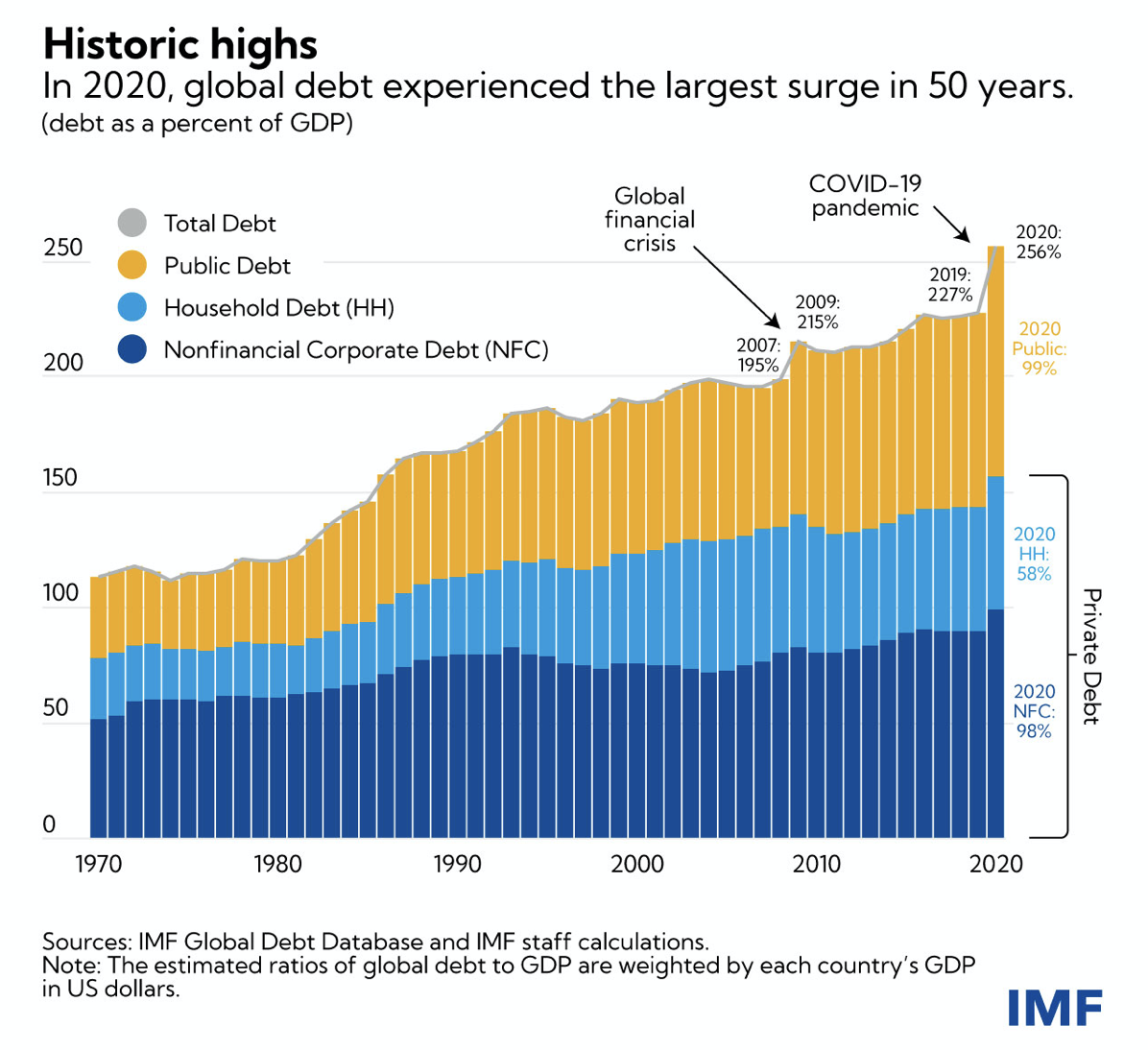
USAGOLD note: Mueller goes on to point out, as shown in the IMF chart below, that global debt is rapidly approaching $300 trillion (that’s not a typo) saying that “With the end of the US dollar’s link to gold in the 1970s, the international monetary system lost its anchor.” He says a “severe financial crisis looms now again on the horizon.” Mueller is a professor of economics at the Federal University UFS in Brazil.

overlay chart showing the breakdown of total global debt through 2020


Share

The post Today’s top gold news & opinion first appeared on Today’s top gold news and opinion.

Categories
Gold

Yellow Gold vs. Rose Gold: How Do They Compare?

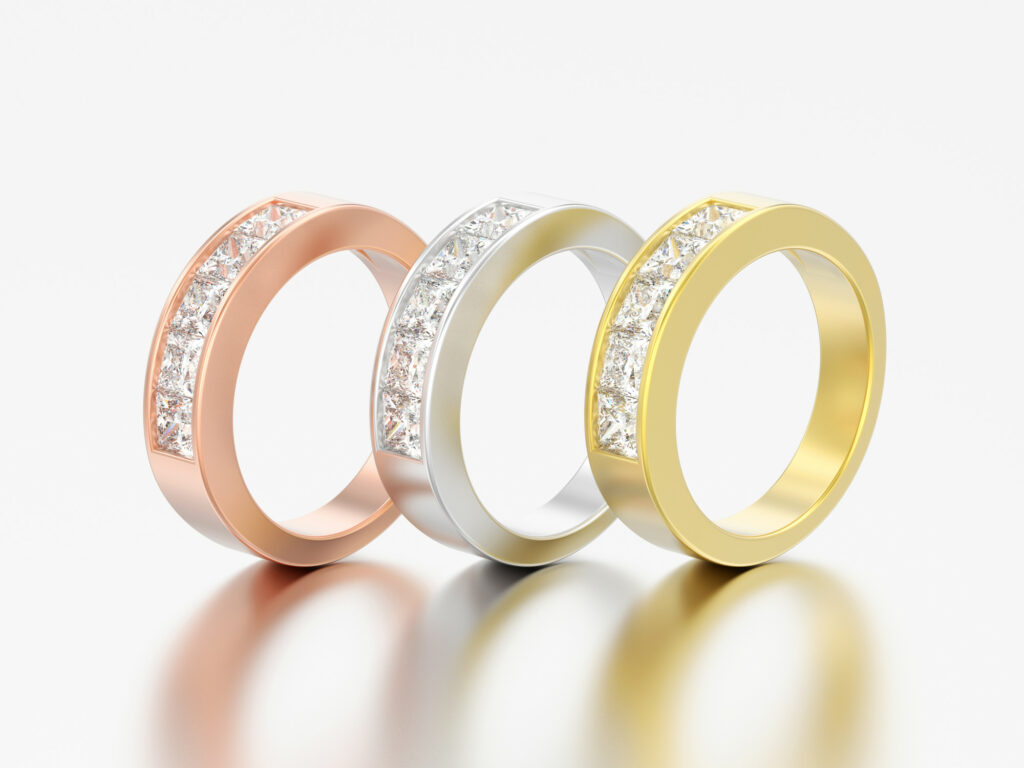
yellow gold vs rose gold

Did you know that people have been using gold as an object of value for thousands of years? Today, people still love to invest in gold because it is resistant to inflation and there’s no worry about it losing its inherent value. Many people are familiar with gold because of its famous yellow color, but there is also such as thing as rose gold which can be pink or red.

When it comes to yellow gold vs rose gold, which is the better investment? Is one really any better than the other or is it just the color that’s different? Keep reading and learn more about these two types of gold below.

What Is Yellow Gold?

Yellow gold is the most traditional type of gold there is. When you dig gold out of the ground, it is actually a very deep yellow color, more yellow than you might expect gold to be. That’s because the gold you tend to see such as gold jewelry is cut with different types of metal such as nickel.

Since nickel is a silvery metal, it makes gold look lighter than it is in nature. Pure gold is also known as 24K gold and it is the real deal. However, its appearance might look strange to you because it is very yellow and not mixed with nickel or any other metals.

Because it is not mixed with any other metals, it is a very weak type of metal on its own. That’s why you don’t often see 24K jewelry; it would become damaged far too easily. However, as an investment, there’s nothing better than 24K gold.

When you invest in pure gold, the weight of the metal directly correlates to its worth. This isn’t the case with other types of gold such as 18K or 10K gold. These types of gold have a high percentage of other metals mixed in. For that reason, even if you have a very heavy 18K gold necklace, it might not be worth as much as you might expect because there isn’t all that much gold in it.

Much of the weight will be made up of nickel and other junk metals. Does that mean you should never invest in gold less than 24K? Not necessarily. 24K gold is very expensive gold and not everyone can afford to invest in it.

18K gold, on the other hand, is the next best thing. There is still plenty of gold in an 18K piece.

What Is Rose Gold?

Rose gold is unique and relatively new compared to yellow gold. That’s because this type of metal only came about at the end of the 19th century. Specifically, Carl Faberge (the same Faberge who created the famous Faberge eggs) invented rose gold. He crafted it for the Russian Imperial family and at the time, the metal was only allowed for the Russian aristocracy and royalty.

Today, anyone can get their hands on rose gold. What makes it unique is its pinkish-red hue. This hue comes about from the presence of copper mixed in with the gold. As mentioned before, nickel is the metal that people usually use to mix with gold to make it harder.

But because copper naturally has a rich reddish-orange color, this color translates well when mixed with gold. The color of the resulting metal will depend on how much copper the manufacturer decides to mix into the gold. The more copper the manufacturer uses, the redder the gold will be.

This can give the metal a very striking appearance, but the downside is that there will not be very much gold in comparison to the copper. This, of course, will not permit the metal to be worth very much. On the other hand, if you mix in less copper, the cold will be more pink than red in color.

When investing in rose gold, you will want to opt for pieces that have a high percentage of gold. Otherwise, your investment won’t be worth very much. 18K rose gold is ideal because it will give you the most amount of gold.

Unfortunately, you cannot get your hands on 24K rose gold. To create rose gold, there has to be some copper mixed in. If you mix any metal with gold, it will no longer be pure.

Yellow Gold vs Rose Gold

Choosing between yellow gold and rose gold can be difficult, but the choice all depends on what you want out of your investment. If you want to be serious about gold investing, you should only invest in 24K gold. That way, you will know that the gold is pure and you will know its value based on its weight alone.

But that doesn’t mean you shouldn’t try investing in other types of gold. After all, if you don’t have a lot of money to start off investing with, investing in other types of gold can be a good place to start. There is not a big difference between investing in yellow gold and rose gold.

For example, 18K yellow gold and 18K rose gold will both contain the same percentage of gold. The only real difference is the appearance. Rose gold is pink due to the addition of copper.

On the other hand, yellow gold keeps its yellow color because the color of nickel and other junk metals is faint in comparison.

Making the Choice

Making the choice between yellow gold vs rose gold can be difficult, but both choices are good choices. If you want to start investing in gold, both of these gold options make for good places to start.

To learn more about investing in gold, contact us here.

The post Yellow Gold vs. Rose Gold: How Do They Compare? first appeared on CMI Gold & Silver.

Categories
Gold

Interpol: Illegal Gold Mining is Devastating Latin America – OCCRP

Interpol: Illegal Gold Mining is Devastating Latin America  OCCRP
Categories
Gold

Gold prices rise on Friday, but fall for 3rd straight week on Fed rate hike prospects – CNBC

  1. Gold prices rise on Friday, but fall for 3rd straight week on Fed rate hike prospects  CNBC
  2. Gold Rises as Investors Seeking an Inflation Haven Pour Into Gold ETFs  Barron’s
  3. Gold Price Forecast: XAUUSD set to test the $1,836/26 support zone – Credit Suisse  FXStreet
  4. Gold finishes higher Friday, but books 3rd straight week of losses  MarketWatch
  5. Gold prices gain following a pull-back in yields, dollar  Reuters
  6. View Full Coverage on Google News
Categories
Gold

Gold Prices Today Struggle, Down ₹2,500 In 2 Weeks | Mint – Mint

Gold Prices Today Struggle, Down ₹2,500 In 2 Weeks | Mint  Mint
Categories
Gold

Gold gains over 1%, but set for monthly decline – Reuters.com

Gold gains over 1%, but set for monthly decline  Reuters.com
Categories
Gold

‘Celebrating goal-setting’: La Jolla Country Day student earns Congressional Award gold medal – La Jolla Light

‘Celebrating goal-setting’: La Jolla Country Day student earns Congressional Award gold medal  La Jolla Light
Categories
Gold

Gold price firmer after U.S. jobs report that’s close to expectations – Kitco NEWS

Gold price firmer after U.S. jobs report that’s close to expectations  Kitco NEWS
Categories
Gold

Stagflation Drags Down Stock Market

Welcome to this week’s Market Wrap Podcast, I’m Mike Gleason.

As turmoil in financial markets unnerves investors, a larger economic crisis may be starting to unfold.

The Federal Reserve’s first steps toward tightening monetary policy are exposing vulnerabilities in the highly leveraged economy. The Fed spent years injecting the economy with artificial stimulus. Now it is trying to take that stimulus away without causing a crash.

On Wednesday, the Fed raised its benchmark interest rate by 50 basis points. That was the central bank’s biggest hike in 22 years.

Fed officials are trying to restore their wrecked credibility on fighting inflation. At the same time, they are trying to engineer a “soft landing” for the economy. Achieving both objectives may prove to be impossible.

As wrong as Fed chairman Jerome Powell was about inflation being transitory, he may be just as wrong about the economy avoiding a recession.

Steve Forbes warned Fox Business viewers that the central bank’s manipulation of interest rates may induce the economy to go from Fed-fueled boom to bust.

Steve Forbes: When they use the word “soft landing”, that’s Fed speak, they hope to slow the economy, but not push it into a recession.

Jerome Powell: It’s a strong economy, and nothing about it suggests that it’s close to or vulnerable to a recession.

Steve Forbes: What it (the Fed) should be doing instead of trying to manipulate the activity of the economy and this idea that if we have a lot of people doing things that’s bad for inflation because prices go up, it’s nonsense. History shows it’s nonsense. Just focus… they should say… “We’re focusing on a stable value of the dollar. We’re looking at commodity prices. We’re looking at the gold price.”

Well, speaking of the gold price, it currently stands at $1,895 per ounce after falling 0.5% since last Friday’s close. Silver is off 1.6% for the week to bring spot prices to $22.66 an ounce. Platinum, showing some relative strength, is up 2.3% this week to trade at $971. And finally, the palladium market shows a big weekly loss now of 11.6% to check in at $2,092 per ounce as of this Friday morning recording, with more than half of those losses coming here with today’s selloff.

Other markets are faring far worse than precious metals this year. The bond market has put in its worst performance in decades. And stock market indexes are at risk of moving from correction to crash under the weight of higher interest rates, higher inflation, and a deteriorating economy.

Last week’s shocker of a GDP report showed the economy contracting by 1.4% in the first quarter. While some dismiss it as a statistical fluke, other signs of a slowing economy are gathering.

This week’s report on productivity showed hourly output per worker plunging at a 7.5% rate – the worst reading since 1947.

Meanwhile, the U.S. trade deficit grew to a record $109 billion.

The extreme swings being evidenced in markets and the economy are the result of monetary policy shifting from ultra-accommodative to less accommodative.

Every time the Fed embarks on a rate hiking campaign, it causes booms to go bust. Easy money policies that enabled and fostered the booms never get fully unwound, though. There is only so much pain Wall Street and Washington, D.C. will tolerate before imploring the Fed to begin easing again.

The Fed will never get to the point of conquering inflation and promoting true price stability. The incentives for policymakers to continue pursuing excess currency creation are simply too great.

That doesn’t mean Fed policies won’t continue to inflict damage to the bond market, the stock market, and the economy. Powell has all but promised additional rate hikes in future Fed meetings.

With rates heading higher, at least for the time being, inflation continuing to rage, and the economy sliding toward a contraction, there are few places for investors to hide. During periods of stagflation, most asset classes lose value in real terms.

That’s what happened during the stagflationary 1970s. Rates rose, bond values fell, and stock market indexes showed negative real returns. In fact, when adjusted for inflation, the Dow Jones Industrial Average lost 75% of its value from its pre-1970 peak to its 1982 low.

There were few places to hide during the 1970s besides precious metals. From 1970 through 1979 – which included periods when the Fed was hiking rates aggressively – gold surged 15 times higher. That was more than enough to generate positive returns after inflation!

Silver during the late 1970s performed even better, leading to a spectacular price spike that has never been exceeded.

Even if we don’t see another precious metals bull run of similar magnitude this decade, there is still a good chance that gold and silver will hold up better in this challenging environment than both stocks and bonds. And there is still time for investors to position themselves in physical bullion before it becomes too scarce or too expensive to obtain.

Well, that will do it for this week. Be sure to check back next Friday for our next Weekly Market Wrap Podcast. Until then this has been Mike Gleason with Money Metals Exchange, thanks for listening and have a great weekend everybody.