Click here to get this article in PDF
Choosing the right engagement ring setting isn’t just about style—it’s about security, too. After all, your ring is meant to last a lifetime, and the setting plays a big role in keeping your diamond safe and secure. Today we’re breaking down three popular and elegant setting styles: the four-prong, the six-prong, and the bezel. All stunning options, but which keeps that center stone most secure?
What is an Engagement Ring Setting?
Let’s start with the basics- what is a ring setting? The setting is the part of the ring that holds
your diamond in place, and it does more than just look pretty. A good setting keeps your stone
secure and helps protect it from everyday bumps and scratches. Different types of settings
offer different levels of protection and style, so choosing the right one is key to both the look
and longevity of your ring.
When you’re done here, check out Lauren B’s signature setting styles
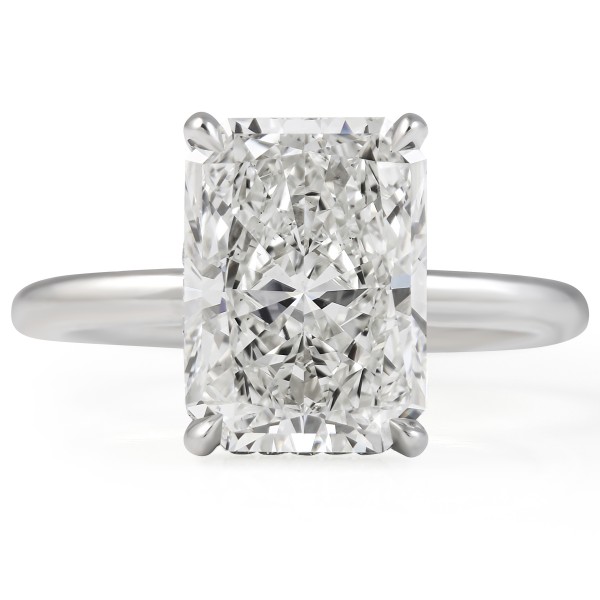
Four-Prong Setting
Four-prong settings are one of the most popular choices for engagement rings—and with good
reason. This timeless style uses four metal prongs (or claws) to hold the stone securely in place,
while allowing maximum light to pass through the diamond for that brilliant sparkle.


4.03 carat Radiant Cut Diamond Solitaire Ring
Here’s why we love the four prong setting:
- More sparkle, less metal: With fewer prongs covering the stone, your diamond gets more
exposure to light—aka, more brilliance. - Easy to clean: The open design makes it simple to keep your ring shining. A gentle brush,
warm soapy water, or your favorite jewelry cleaner will do the trick. - Endless Variations: Not all four-prong settings are created equal! While they all feature four metal prongs that secure your stone, the way those prongs are styled can change the entire vibe of the ring. Some variations we love are:
-
- Compass Setting: Instead of the traditional 4 prongs in each corner, compass set rings
hold the diamond at the north, south, east and west points of the stone.
- Compass Setting: Instead of the traditional 4 prongs in each corner, compass set rings


7.08 carat Antique Cushion Lab Diamond Compass Prong Cigar Ring
-
- Double claw prong: Technically still a 4 prong setting – this setting style is exactly what it
sounds like: two delicate prongs side-by-side in each corner instead of 4 thicker prongs.
This style is often seen in vintage-style rings.


3.01 carat Emerald Cut Diamond Super Slim Ring
- Double claw prong: Technically still a 4 prong setting – this setting style is exactly what it
Six-Prong Setting
As you might have guessed, the six-prong setting features two additional prongs that provide
extra security and a slightly more rounded, floral look around the stone. It’s a favorite for those
who love a touch of antique charm with added peace of mind in terms of security.


3.24 carat Marquise Lab Diamond Solitaire Engagement Ring
Here’s why we love the six prong setting:
- Enhanced symmetry and brilliance
With six evenly spaced prongs, round diamonds in particular appear more defined and
balanced, although we love a six-prong setting for a variety of diamond shapes.


7.20 Carat Round Lab Diamond Three Row Band Ring
- Slim & minimalistic
Because there are more prongs holding the stone in place, the prongs themselves can be
made thinner and more delicate without sacrificing security.
Which is more secure: 6-prong or 4-prong Settings?
When it comes to security, both four-prong and six-prong settings do a great job of keeping
your stone in place—but more prongs mean more protection. That’s why, technically speaking,
the six-prong setting offers a higher level of security. With extra points of contact holding the
diamond, there’s a smaller chance of losing a diamond if one prong gets bumped or loosened
over time.
Bezel Setting
If security is your top priority, the bezel setting is hard to beat. Known as one of the most
protective engagement ring styles, a bezel setting fully encircles the stone with a thin metal rim
—offering complete coverage and a fun, metal-forward modern setting style.


2.76 carat Emerald Cut Lab Diamond Bezel Set Ring
- Full protection: A bezel setting completely encases the sides of the diamond or gemstone
with a metal rim, holding it firmly in place. Because of this tension setting style, its smooth,
flush design won’t snag on clothing, hair or anything else, making it perfect for someone
with an active lifestyle. - Bezel setting vs. half bezel: A half bezel offers a more airy, open look by only partially
encasing the stone, typically on either side. If you want the protection and modern look of a
bezel, but want that extra sparkle, a half bezel is a great choice.


2.77 carat Radiant Cut Lab Diamond Bezel Set Ring
Bezel vs. Prong Settings:
When choosing between a prong setting and bezel setting, we recommend going for what suits
you best: your taste and lifestyle. 4-prong, 6-prong and bezel are all secure settings that we
offer our clients every day. For those extra concerned about the security of their centerstone –
bezel prevails. A bezel setting will guarantee a tighter hug on your stone, and no snagging on
clothing or otherwise. Prong settings, while secure when well-made, leave more of the stone
exposed. This allows for more light (and sparkle), but also allows for slightly more risk,
especially if a prong bends, loosens, or catches on fabric. That said, a 6-prong setting provides
more stability than a four-prong and offers a nice middle ground between brilliance and safety.
In order of security: Bezel reigns supreme, then 6-prong, then 4-prong.