Click here to get this article in PDF
Following an economically and geopolitically tumultuous 2025, the Trump administration plunged the United States into military conflict in the Middle East. This costly gamble comes mere weeks after a bipartisan Congressional group warned that the U.S. national debt was “unsustainable.”
In this week’s The Gold Spot, Scottsdale Bullion & Coin’s Sr. Precious Metals Advisor Steve Rand and Precious Metals Advisor Brian Conneely explain gold and silver’s puzzling performance amid war escalation, why the U.S. financial situation is so dire, and why gold remains a central pillar of stability amid so much economic uncertainty.
Gold and Silver Whipsaw Amid New War
In the wake of President Trump’s fresh war with Iran, gold and silver have seen choppy price action. Although the immediate breakout of military action coincided with a pop in safe-haven assets, the brief tailwind was short-lived. The retreat into tangible investments quickly gave way to U.S. dollar demand.
Gold prices spiked above $5,300/oz before falling below $5,100/oz, although prices have largely stabilized. As is often the case, silver prices experienced more variability, dropping from around $94/oz to $82/oz. In contrast, the U.S. Dollar Index — which measures the greenback’s strength against a basket of foreign currencies — rose by nearly 1%.
This whipsawing in the gold and silver prices mirrors the long-standing inverse relationship between gold and the U.S. dollar. When the greenback rises in value amid soaring demand, the yellow metal tends to falter. The same is true in reverse.
This knee-jerk dive back into U.S. assets doesn’t discount the years of progress gold has made as the center of a burgeoning economic order, nor does it undo the weakness exhibited by U.S. Treasuries and the USD.
The Grim State of the U.S. National Debt
The specter of another protracted war in the Middle East looms large over fiscal hawks who have been ringing the alarm bells over the U.S.’s worrisome fiscal trajectory. One of the most vocal proponents for increased financial responsibility has been Congressman David Schweikert, who joined the SBC team on a special episode of The Gold Spot last week.
Congressman Schweikert soberly outlined America’s fiscal reckoning and what it would take to back up from the economic precipice. This insightful interview followed a report from the Congressional Budget Office (CBO) — a nonpartisan agency tasked with providing financial and economic predictions — which plainly concluded:
The fiscal trajectory is not sustainable.–
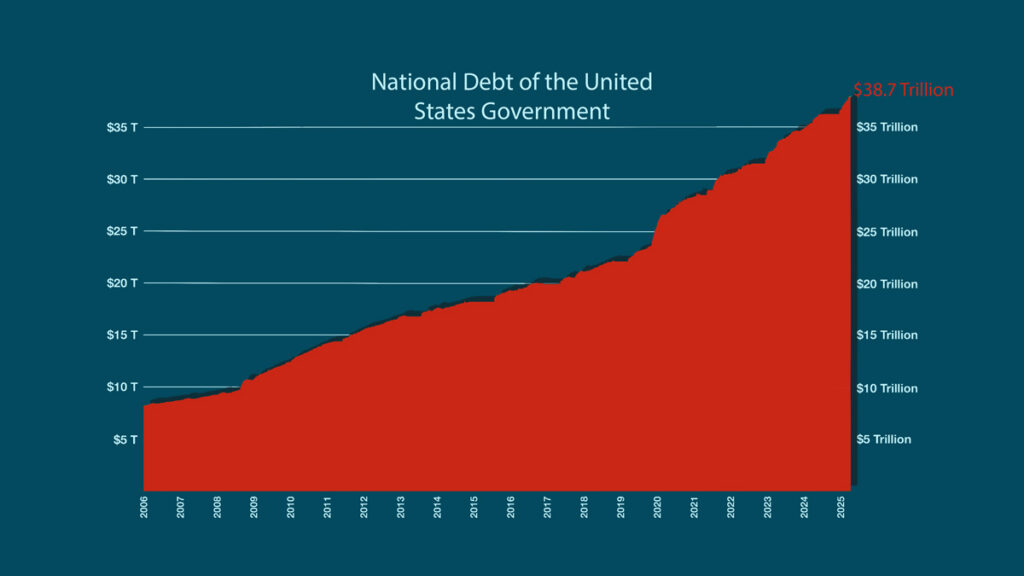
The Budget and Economic Outlook: 2026 to 2036 makes some stark assessments and predictions, such as:
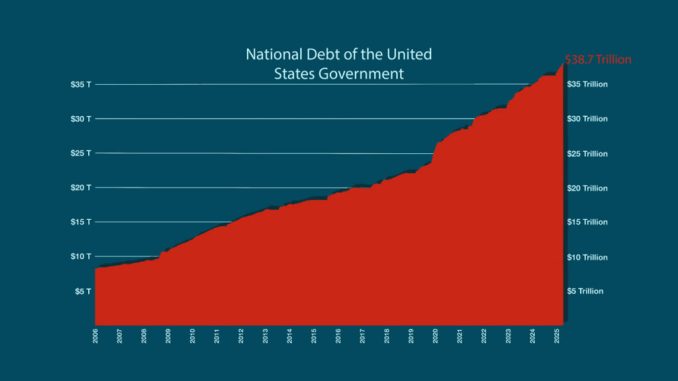
- The national debt is fast-approaching $39 trillion and is projected to reach $50 trillion by 2030.
- The U.S. Treasury has to borrow $7 billion every day to fund the ever-expanding federal budget, digging the debt hole even deeper.
- The federal deficit is projected to average $2 trillion annually.
- The deficit-to-GDP ratio is near a relatively high 6% to 7%, a rate normally seen only during wartime.
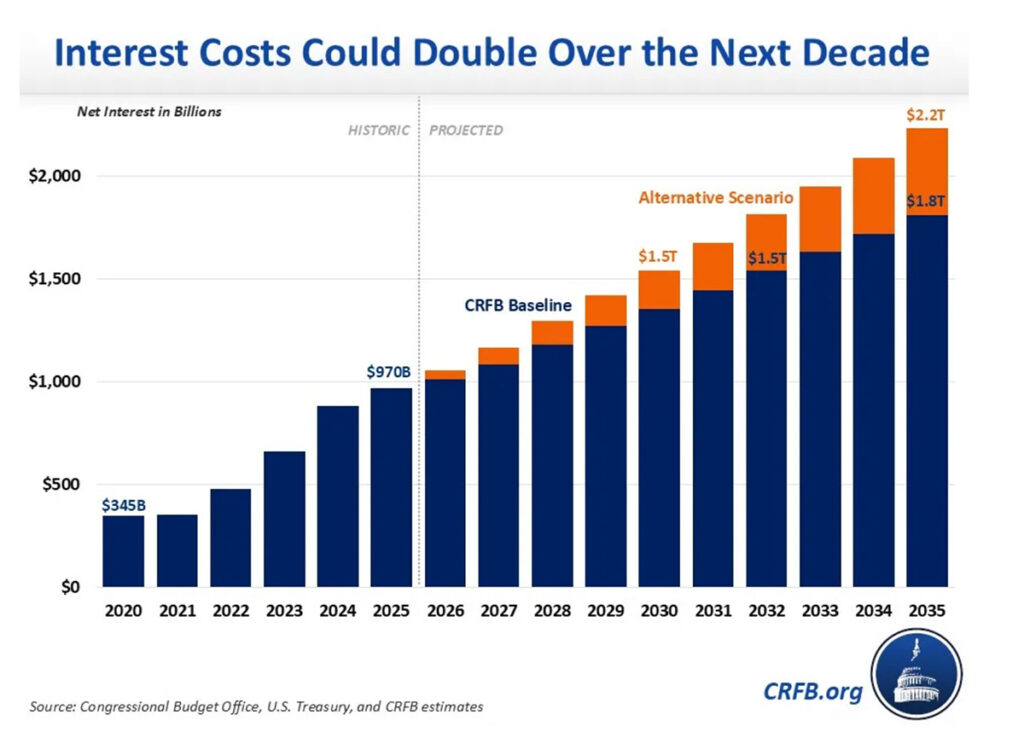
- Interest payments spent to service the debt stand at $1 trillion and could reach nearly $2 trillion in the mid-2030s.
Mandatory Spending is the Main Debt Driver
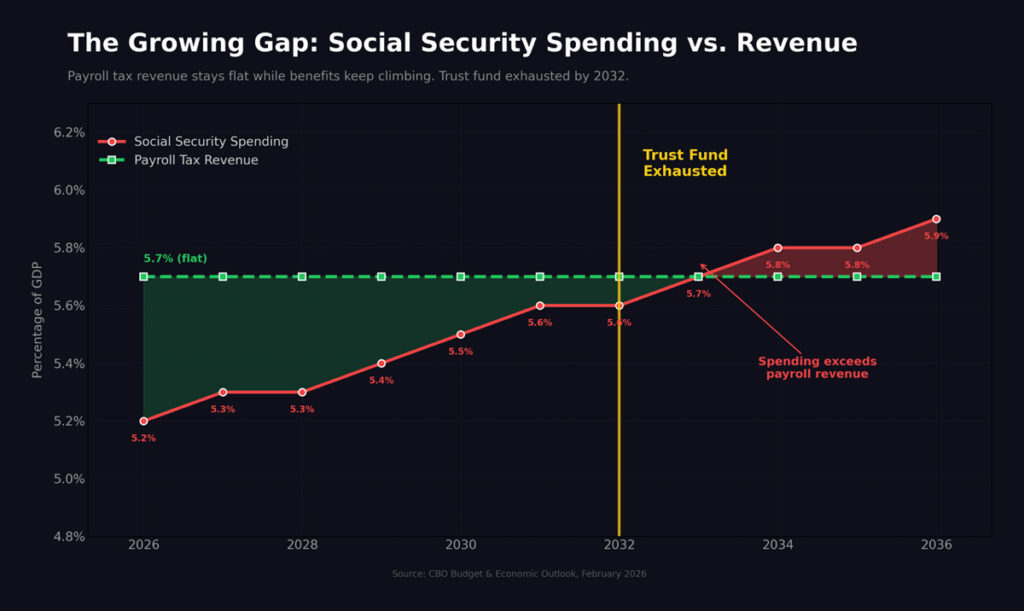
The main driver of the national debt crisis is mandatory spending on Social Security, Medicare, and interest payments. Together, these non-discretionary spending categories represent the largest line items of the federal budget. Together, these automatic expenses comprise nearly three-quarters of government spending.
To make matters worse, the country’s rapidly shifting demographic landscape is drying up Social Security funding. As the Baby Boomer generation enters retirement and birth rates fall, the number of workers per retiree is plummeting. This figure stood at 5.1 in 1960 and has fallen to 2.5 today. The CBO expects it to hit 2.1 by 2036.
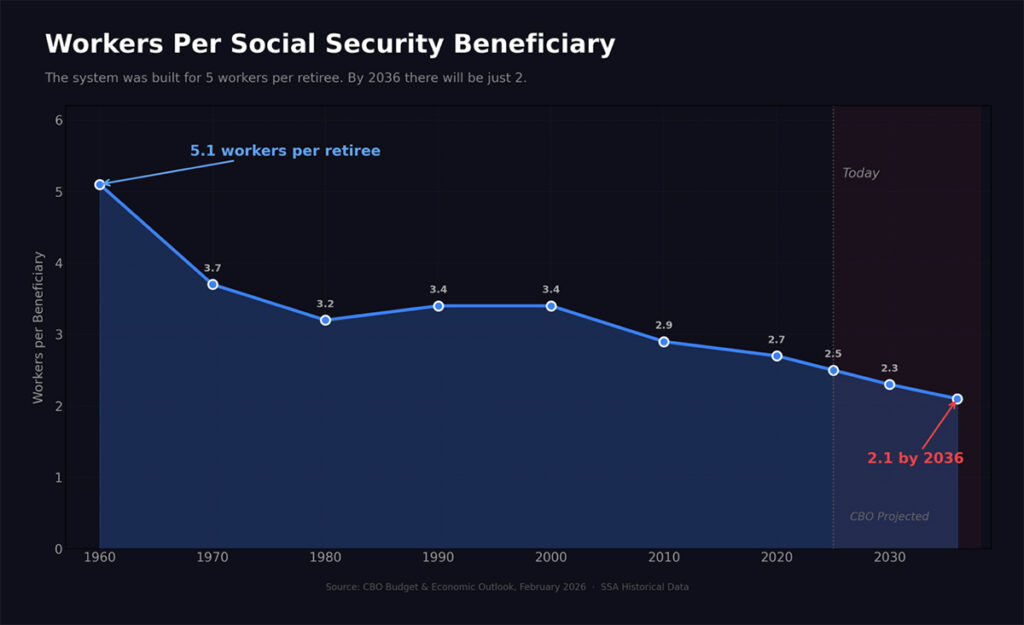
The main funding source of Social Security is expected to be fully depleted by 2033 or 2034. This would trigger a 20% to 25% reduction in benefits for all recipients. Medicare faces similar financing challenges over a similar timeframe.
The Iran War Compounds the Debt Crisis
On the campaign trail, Donald Trump promised to tackle the national debt and avoid wars in the Middle East — two extremely popular, bipartisan positions that appear all but abandoned. Earlier, experts speaking with the Wall Street Journal estimated that the mere buildup of personnel and weapons in the area cost $630 million, before a single shot was fired. The Center for American Progress estimates total spending has eclipsed $5 billion less than a week into the fighting.
The Penn Wharton Budget Model projects total costs could reach $210 billion, according to Fortune. For reference, the cost-cutting Department of Government Efficiency claims to have slashed only $215 billion of government spending. With a surging national debt, every dollar spent on the war with Iran is added to the tab.
“There is no war budget surplus. It all piles onto a debt that the CBO already calls unsustainable.”

Brian Conneely
Precious Metals Advisor

Gold Still Outshines the Dollar
The temporary pop in the U.S. dollar, mirrored by volatility in precious metals, has many investors wondering whether the safe-haven rush is over. In reality, the broader trends still point to dollar weakness and gold strength.
The USD remains near multi-year lows, the U.S. credit rating has been lowered by all three major rating agencies, and demand for U.S. Treasuries is historically weak as countries around the world pursue de-dollarization.
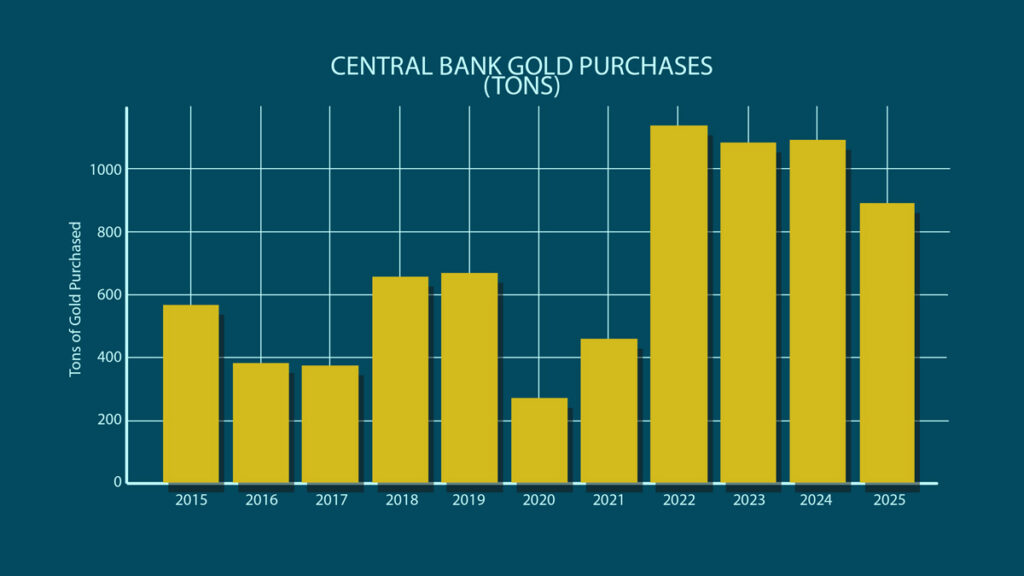
Meanwhile, gold is rising as a cornerstone of a new global economic order amid faltering fiat currencies. Total gold demand surpassed 5,000 tons for the first time in 2025, and gold ETF demand shattered records in early 2026. Zooming out, central bank gold demand, one of the strongest sources of gold purchases, has remained at historic highs for the past four years straight.
“Short-term, the dollar wins the safe-haven contest. That’s what we see right now. But…countries from around the world are actively moving away from the dollar and buying gold. Today’s volatility is just noise.”

Steve Rand
General Manager / Sr. Precious Metals Advisor
The Debt Picture Washington Isn’t Talking About
The Iran conflict is now adding another layer of spending to an already strained federal balance sheet. If you want a deeper look at the numbers behind America’s fiscal outlook, watch last week’s The Gold Spot featuring Arizona Congressman David Schweikert. In the interview, he breaks down the latest CBO report and explains why the country’s debt trajectory is becoming increasingly difficult to ignore.
Question or Comments?
If you have any questions about today’s topics or want to see us discuss something specific in a future The Gold Spot episode, please add them here.
CommentPowered by WPeMatico
Questions or Comments?
“*” indicates required fields