Click here to get this article in PDF
What is a lab diamond ring?
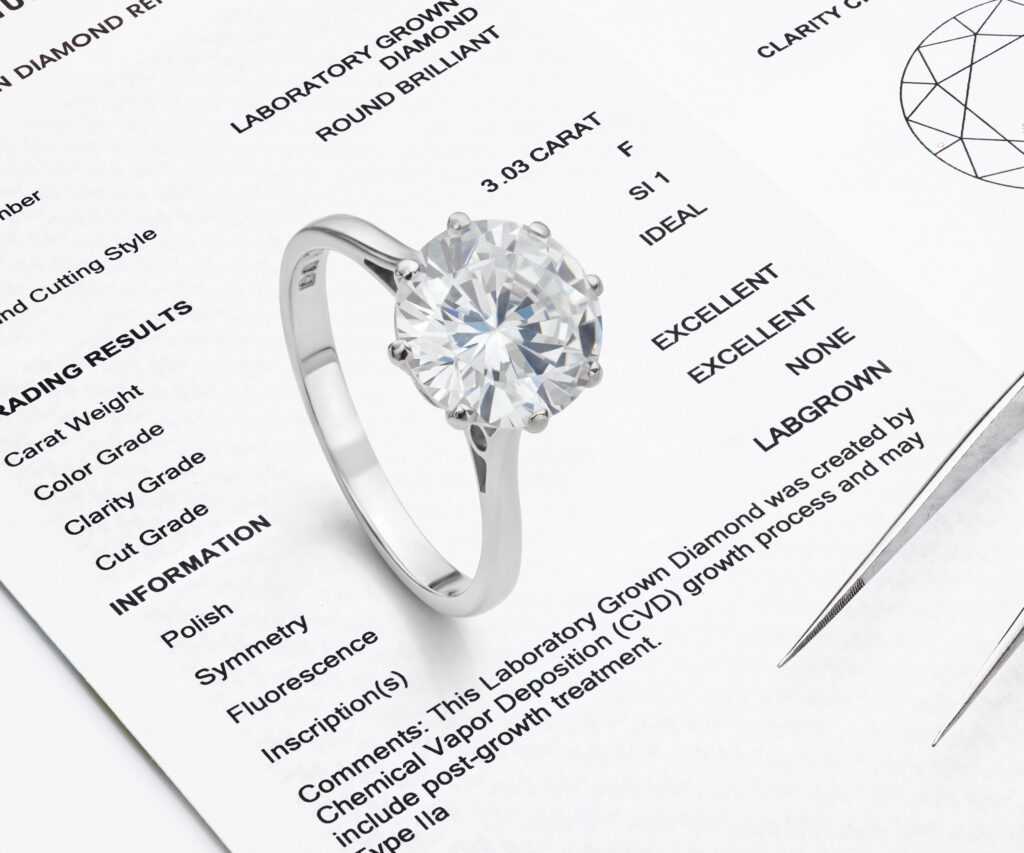
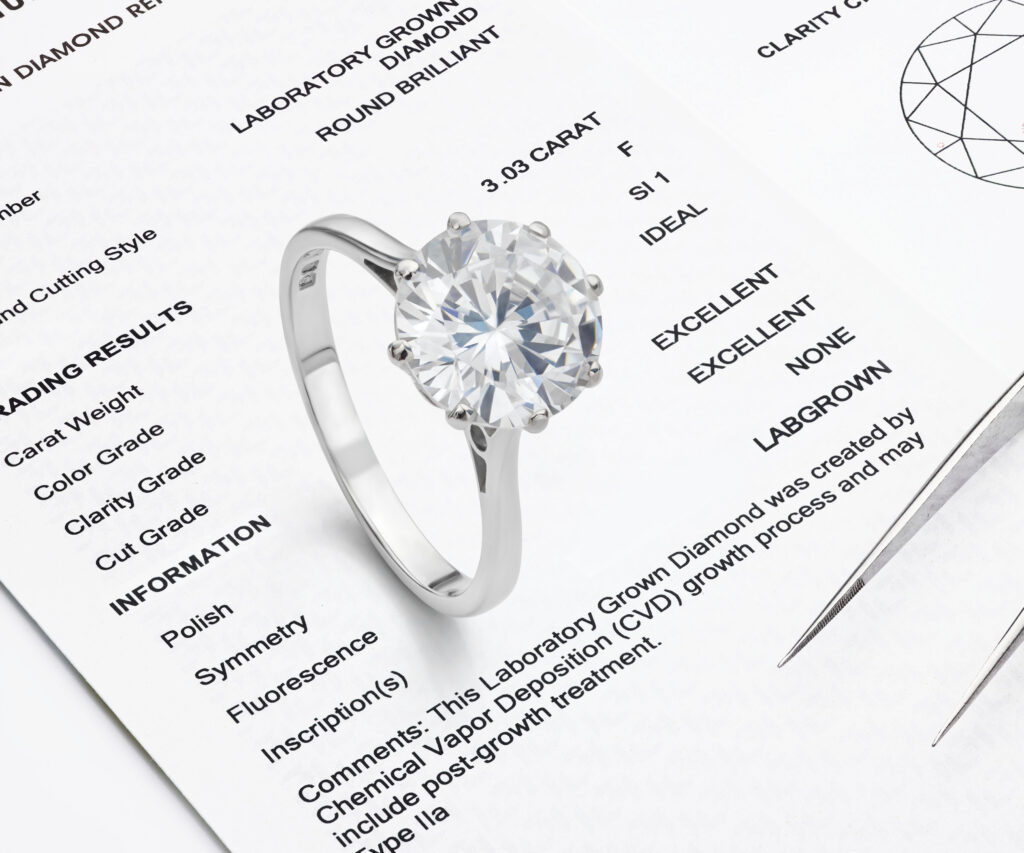
Lab diamond rings describe any type of diamond ring set with at least one laboratory-created diamond set within the design. Jewellery types include engagement rings, wedding rings, diamond eternity rings or dress rings. In fact, any type of diamond jewellery can be set with a created diamond instead of a natural diamond or gemstone.
Where to buy a laboratory-grown diamond ring?
Buyers have two choices. Firstly, they either purchase a ready-made diamond ring. Or, secondly, they choose their loose lab diamond before selecting their ring design. The latter of these two choices makes a more versatile choice.
Some of our own clients select from our list of lab-grown diamond stock. Our list updates weekly, but for clients unable to find their perfect diamond, we provide a diamond concierge service to source a suitable diamond.
View our weekly updated list of available lab-diamonds suitable for most ring styles.
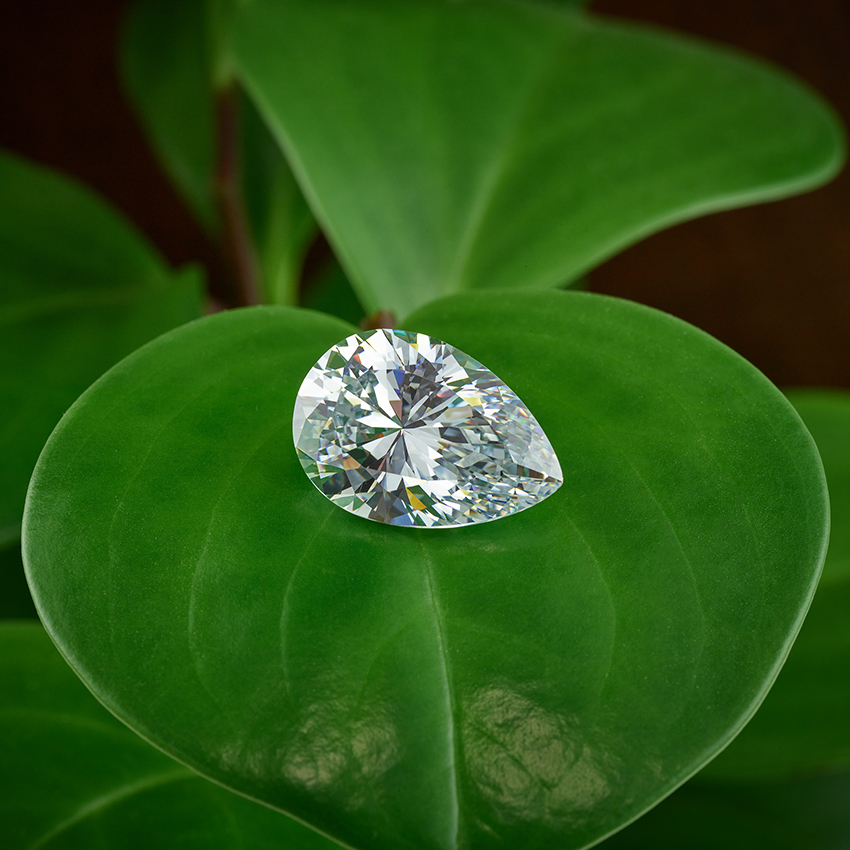
Many online retailers offer similar services, but fewer retailers on the high street offer lab-grown diamonds. However, this trend continues to grow.
We offer natural and lab choices from our website, and in-person from our UK showroom based in Ryde. Please contact us at any time for help and guidance. We provide information such as certification, photography and video consultation without any obligation to purchase.
Lab-grown vs natural.
But, why do buyers choose a lab-grown diamond over a natural diamond? With little difference in appearance, the choice is not aesthetic. Both types of diamond have the same chemical properties. Essentially, they are cheaper than a natural diamond and are created in a laboratory, rather than formed beneath the Earth over millions of years.
Natural mined diamonds cost far more (almost double) compared to cultured lab diamonds, or synthetic diamonds. These types of diamonds originate in a laboratory.
In addition, the process guarantees that they are conflict-free. Not all consumers insist on an ethical choice, but a growing movement of ethical consumers demands greater transparency in the goods they purchase.

The Orion lab-grown diamond engagement ring design
Why not just choose a cubic zirconia ring?
In our previous article, we looked at different ways to tell a real diamond from a fake. This included cubic zirconia—an impractical stone for any type of ring for reasons of reduced durability. In addition, cubic zirconia lacks anywhere near the same level of brilliance, with very little value.
Inspect a cubic zirconia ring after a few weeks of wear and you will see noticeable wear across the gemstone. In contrast, diamonds retain their pristine appearance after years of wear.
What is the environmental impact of a man-made diamond ring?
Man-made diamond rings vary enormously in the way the diamonds are made. We have already looked at CVD and HPHT methods in our buyer’s guide to lab-grown diamonds. We work with a small selection of manufacturers who work with renewable energy to reduce their carbon footprint.
As a result, most of our man-made diamond rings come with the assurance of reduced environmental impact in addition to ethical sourcing.
Can you mix natural with created diamonds in a ring?
Yes, we can mix created with natural diamonds in a ring design. As an example, we can add less expensive small natural halo diamonds to surround a large lab-grown diamond. Most importantly, we document all information on our client’s invoice and valuation to ensure full disclosure to our clients.
Our video below shows an example of a lab diamond ring with additional natural diamonds surrounding the centre stone.
The post Lab Diamond Rings – A Guide to Man-Made Diamonds for Rings appeared first on Serendipity Diamonds Blog.