Click here to get this article in PDF
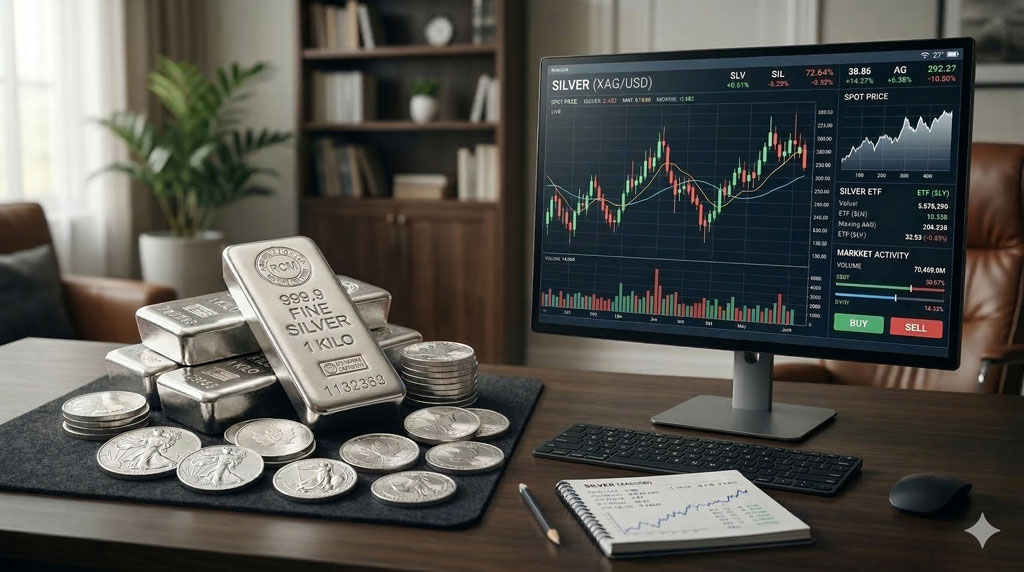 The stark gap between the spot price of silver and the actual value of physical silver assets is a constant source of confusion for investors. Despite being commonly viewed as interchangeable, paper silver and physical silver represent two very different methods of precious metals investing. Each asset is subject to unique market influences, leading to a price disparity. Investors must understand the difference between paper silver and physical silver assets, along with the advantages and considerations of each, before investing.
| Paper Silver | Physical Silver | |
|---|---|---|
| Value | Tracks the spot price of silver | Represents the true price of silver |
| Ownership | Provides investors with paper certificates of ownership | Investors can take tangible control of the asset |
| Types | Mutual funds, ETFs, mining stocks, etc. | Bullion, coins, bars, etc. |
| Counterparty Risk | Subject to third-party providers | Investors have greater control |
| IRA Eligibility | Yes | Yes (depending on weight, purity, and other factors). |
Understanding Paper Silver
Paper silver refers to non-tangible investments that seek to track the spot price of silver. These representative assets offer indirect exposure to the silver market without requiring investors to own physical silver. Mutual funds, ETFs, and mining stocks are all examples of paper silver investments.
The name is derived from the fact that trading these assets requires the buying and selling of paper contracts. Some people use the terms paper silver and digital silver interchangeably given that most paper silver products are represented digitally in trading accounts, apps, and platforms.
Is paper silver real silver? No, paper silver isn’t real silver. Paper silver assets get their name from the pieces of paper that represent an investment in this precious metal. Although some silver ETFs or mutual funds could hold a certain amount of physical silver, this typically isn’t accessible by holders of those paper silver assets.
Understanding Physical Silver
Alternatively, physical silver is comprised of tangible assets such as bullion bars, coins, ingots, and even junk silver. Unlike its paper counterpart, physical silver boasts inherent value derived from its considerable scarcity, high demand, and widespread usage. Investing in actual silver assets gives investors direct access to this value and all accompanying benefits.
The Ratio of Paper to Physical Silver
Estimates suggest that the paper silver market is 250 times larger than its physical cousin. Although it’s challenging to pinpoint the precise difference given the constant fluctuations in trading and physical silver supply, it’s clear that the paper market is orders of magnitude larger.
Since paper silver assets aren’t restrained by physical supplies, paper trading far outpaces the buying and selling of tangible products. Physical silver is considerably rarer due to its limited natural resources, mining challenges, and processing costs.
Paper Silver: Advantages and Downsides
Advantages:
- High Liquidity: The market for paper silver is significantly larger than for its physical counterparts because trading isn’t limited to available supplies. This flexibility results in more trading activity for paper silver assets. In turn, this translates to high liquidity, making it easy for investors to “load” and offload paper silver depending on their needs.
- Ease of Accessibility: Paper silver is easily traded on the vast majority of retail investment platforms. Buying and selling silver stocks, ETFs, mutual funds, or mining stocks is as simple as clicking a few buttons. Most investors already have access to these accounts which drastically lowers the barrier of entry to investing in paper silver.
- No Storage Requirements: Perhaps the biggest advantage of paper silver is the lack of storage. Instead of taking physical ownership of the asset, you have virtual representations of your investment in your trading account or retirement plan. This eliminates the need for finding and paying for storage and security.
Downsides:
- Counterparty Risk: Investing in paper silver introduces investors to counterparty risk which is the potential for a third party to default on their agreement. This risk is particularly acute as investors rely on financial intermediaries such as banks, mutual funds, and brokerages to manage their assets. If any of these parties go bankrupt or fail to meet their obligations, investors could suffer repercussions.
- Volatility: According to Morgan Stanley, the spot price of silver can be up to 3x more volatile than gold prices. While physical silver’s value is derived from scarcity, demand, and inherent value, the worth of paper silver is determined by futures prices. The speculative nature of futures contracts leads to greater volatility. Additionally, major investors such as banks or governments can cause significant fluctuations in the market due to the size of their investments.
- Manipulation: Rapid price swings aren’t the only result of Institutional intervention in the paper silver market. Without any boundaries of physical supply, this market is highly susceptible to price fixing. Although gold manipulation has received the lion’s share of exposure, two J.P. Morgan traders have been convicted of attempted price manipulation and fraud in the silver market.
👉 Related: End Game for Silver Market Manipulation?
Physical Silver: Benefits and Considerations
Benefits:
- Full Control: With physical silver, you gain full control over your investment rather than relying on banks, fund managers, or other third parties to handle it on your behalf. This significantly minimizes the counterparty risk inherent while giving investors greater peace of mind.
- Hedge Against Inflation: Paper silver gives the allure of protection, but these indirect investments are still susceptible to the unpredictability and instability of the broader market. The inflation-hedge properties of precious metals are only found in their physical forms. When you diversify with physical silver, your assets are insulated from the volatility of the economy.
- Privacy: The rise of a central bank digital currency (CBDC) is bringing concerns about financial privacy, anonymity, and safety to the forefront of investors’ minds. For centuries, physical silver has offered protection from the prying eyes of the government due to its limited tax reporting and tangible nature.
- Bartering: Silver’s history of use as a currency rivals that of gold, making it one of the most widely recognized forms of value in the world. This widespread use and demand make it a perfect tool for bartering. With geopolitical tensions rising and markets collapsing, many investors are eager to invest in assets that are valuable beyond the current economic system. Silver rounds and junk silver represent some of the best bartering forms of silver.
- True Diversification: Investors looking to achieve full portfolio diversification need to include physical gold in their precious metals allocation. Alongside gold, physical silver can increase the stability and long-term performance of your nest egg. This way, you’re diversified not just across different asset classes, but also within the precious metals.
👉 Related: Silver Stacking: What It Is & How It Can Help Investors Protect Their Wealth
Considerations:
- Storage (Theft Risk): The threat of physical theft isn’t a concern for paper silver assets. When investing in physical silver, it’s highly advisable to secure your investments by storing them in a private, reputable, and safe facility.
- Manipulation: In general, physical silver investments enjoy steadier price action and greater stability than paper silver assets due to their inherent value. However, silver bullion is a notable exception given this subcategory of silver assets is at a slightly higher risk of market manipulation than rare silver coins.
Deciding Which is a Better Investment
Ultimately, deciding between paper and physical silver comes down to your personal investment timeline and goals. If you want to capitalize on short-term price movements and prioritize high liquidity, paper silver offers an easily accessible vehicle. However, if your focus is on true portfolio diversification, minimizing counterparty risk, and hedging your assets against broader economic instability, holding tangible physical silver is unparalleled. As metals continue to navigate this historic high-price environment, positioning your portfolio correctly depends on understanding exactly what you hold—and why you hold it.
Powered by WPeMatico