Click here to get this article in PDF
Every year, Congress releases a nonpartisan report on the country’s economic and fiscal trajectory. While often overlooked by the broader public, these troubling findings have many fiscal hawks and financial leaders raising the alarm bells.
In this special episode of The Gold Spot, Congressman David Schweikert joins Scottsdale Bullion & Coin’s Founder Eric Sepanek and Precious Metals Advisor John Karow to unpack the warning signs in the latest outlook, the hard choices required to address them, why leaders are unlikely to act, and what that means for investors navigating the road ahead.
Washington’s Most Overlooked Economic Report
In mid-February, the Congressional Budget Office (CBO) — a nonpartisan agency focused on providing independent analyses — released 📚 The Budget and Economic Outlook: 2026 to 2036. A similar report is released every winter, projecting the country’s financial and economic outlook over the next decade.
Congressman Schweikert jokingly refers to it as “the report that almost no one will actually read.” Despite its limited public readership, the report serves as the federal government’s baseline fiscal barometer, informing lawmakers, influencing markets, and framing the nation’s long-term economic outlook.
The “Dark Numbers” Facing the Country
With nearly 200 pages of technical data and dozens of charts, the CBO report can feel overwhelming for even the most savvy investors. However, a few headline figures stand out as the most pressing issues facing the U.S. economy and everyday Americans.
The fiscal trajectory is not sustainable.–
Debt Driving Policy
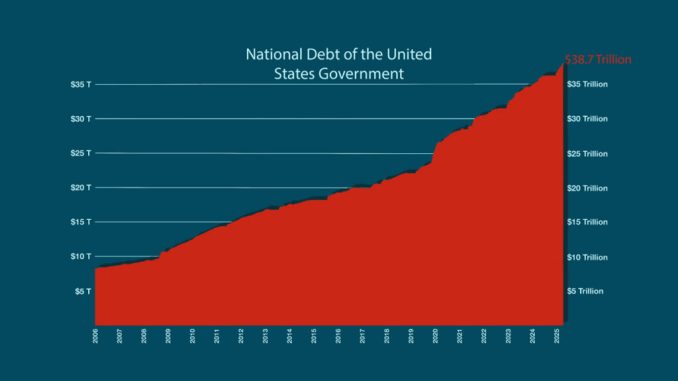
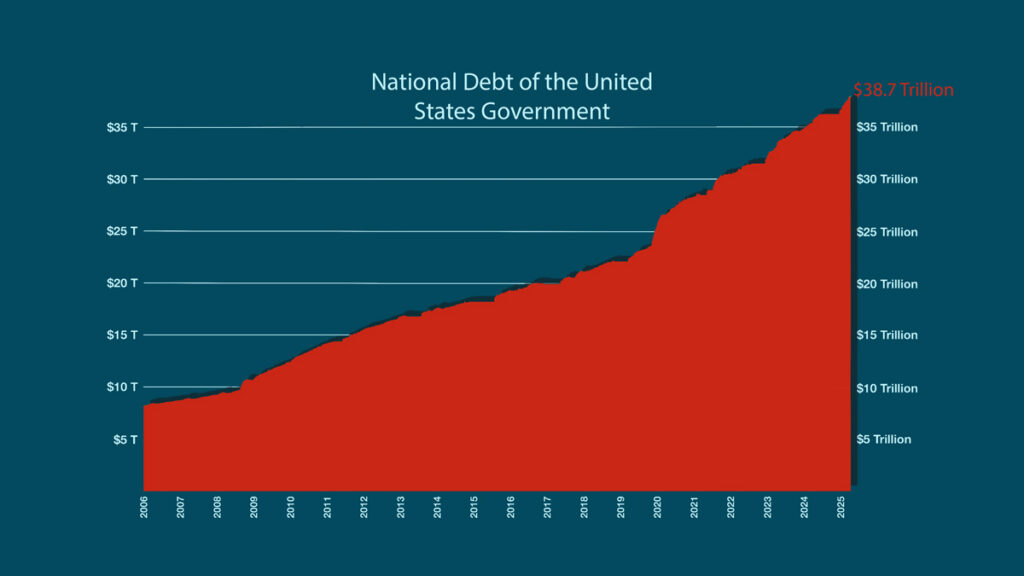
The steady rise in national debt is increasingly shaping fiscal policy decisions. Now approaching $39 trillion, the debt burden has nearly quadrupled over the past 15 years. If current trends continue, some analysts warn it could climb toward $50 trillion by 2030.
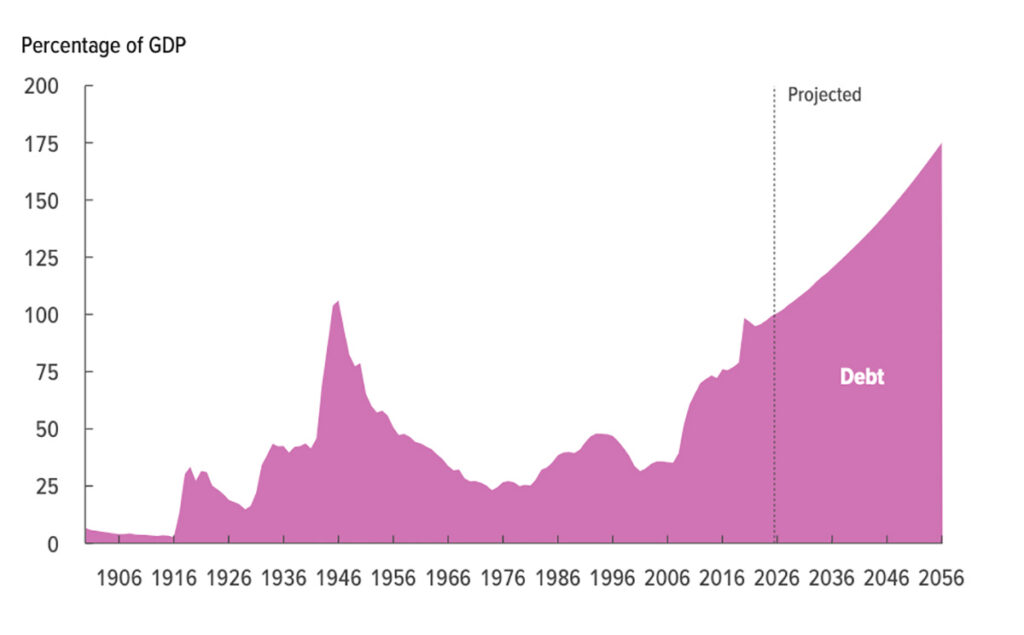
The raw debt figure is troubling, but its true burden becomes clear when viewed against the country’s economic output. While Congressman Schweikert concedes that “the economy is actually doing pretty darn well,” growth alone cannot outpace persistent fiscal imbalance. Debt held by the public now stands near 100% of GDP, approaching levels last seen in the aftermath of World War II. These wartime-scale deficits in a period of peace are projected to rise to nearly 120% by 2036 and to nearly 175% by 2056.
Exploding Interest Costs
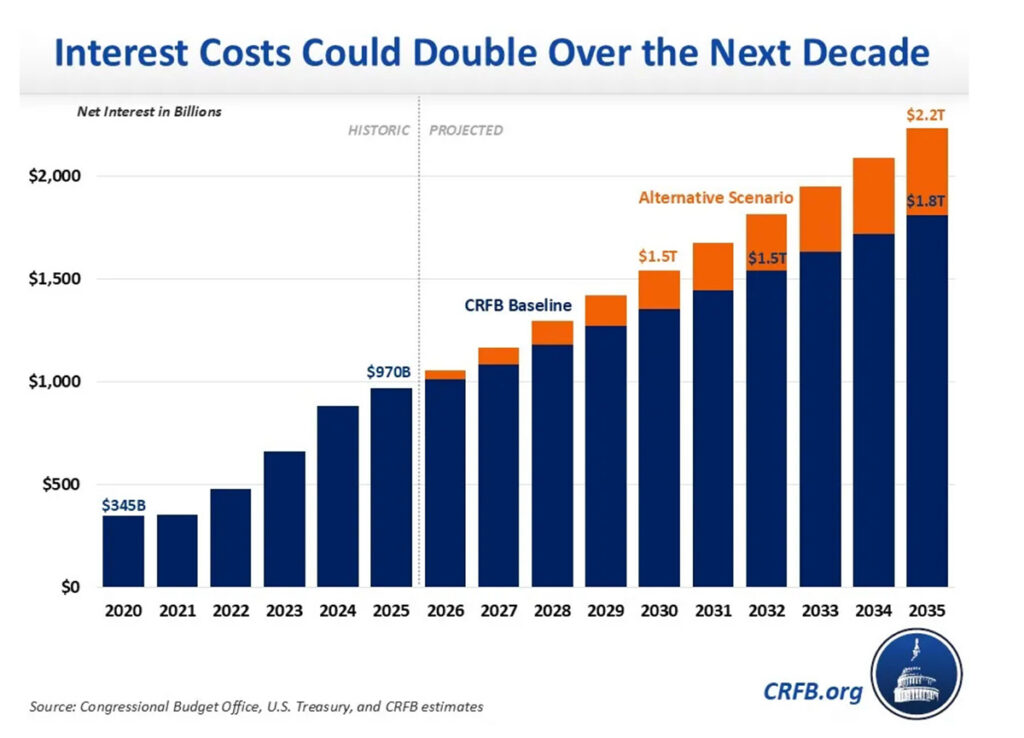
The interest the federal government pays on borrowed money has become one of the fastest-growing components of the budget. After totaling just under $1 trillion in 2025, those costs are projected to surge to about $1.8 trillion per year by the mid-2030s. In a worst-case scenario, interest expenses could hit $2.2 trillion in the same time frame.
Extraordinary Borrowing Pace
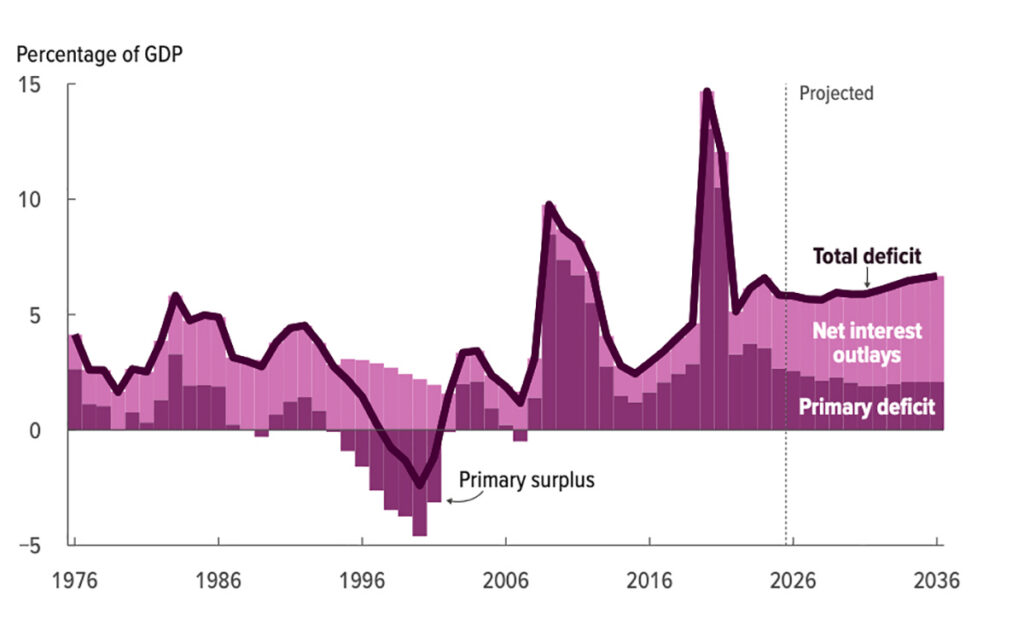
The financially constraining combination of rising nondiscretionary spending and escalating interest costs is placing increasing pressure on federal finances and driving historically large deficits. The Treasury is currently borrowing roughly $7 billion per day, and the CBO projects deficits averaging about $2 trillion annually over the next decade.
Like total debt, annual deficits are consuming a growing share of the economy. The deficit-to-GDP ratio is expected to remain in the 6% to 7% range over the next ten years, levels rarely sustained outside periods of war or severe economic crisis.
Unavoidable Long-Term Spending Pressures
An increasing share of federal spending is driven by obligations embedded in law. So-called mandatory programs and interest costs operate largely on autopilot, growing as eligibility expands and borrowing accumulates. Over the coming decade, these commitments are projected to consume roughly three-quarters of federal spending, leaving limited room for discretionary priorities.
The Demographic Vice Squeezing the U.S. Economy
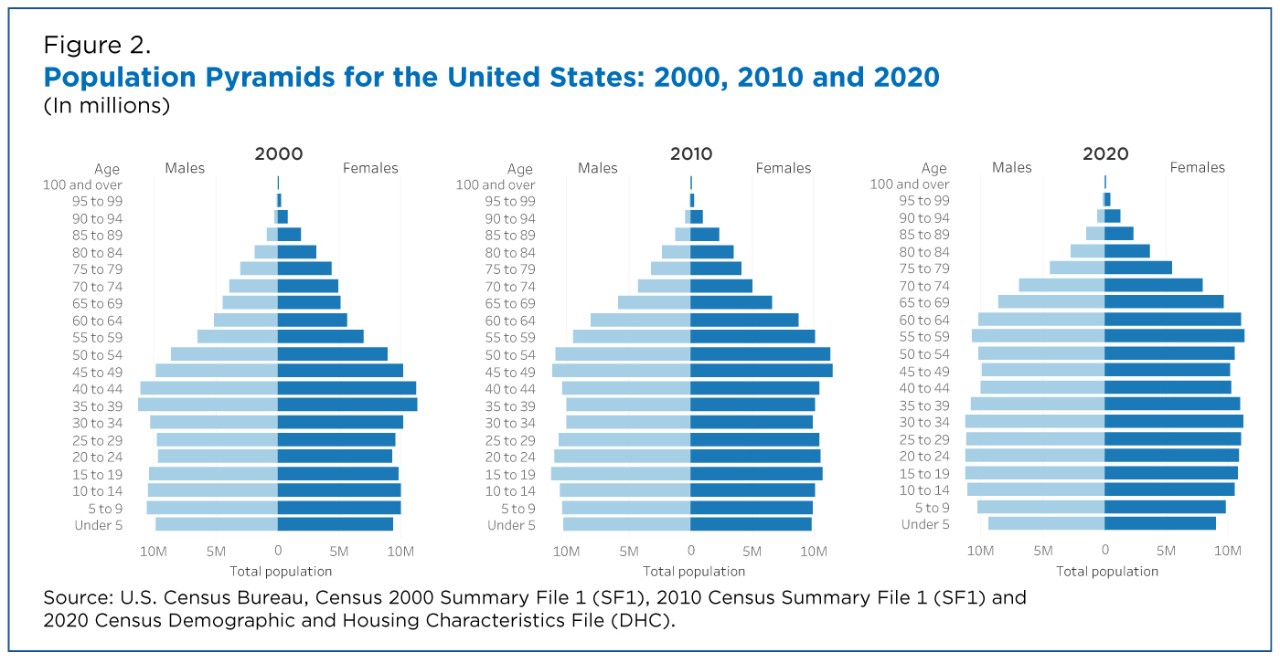
The CBO’s grim projections for U.S. debt and its drag on economic growth are not simply matters of fiscal policy or economic cycles. The country is also confronting a demographic shift as the Baby Boom generation moves into retirement, reshaping the nation’s age balance.
By the early 2030s, older adults are projected to outnumber children for the first time in American history, while the population age 65 and older is expected to grow by roughly 30% over the next decade. This shift places increasing strain on the nation’s largest social programs, including Social Security and Medicare, which rely on payroll contributions from current workers to fund benefits.
Source: Census Bureau
The Social Security Old-Age and Survivors Insurance trust fund is projected to be depleted sometime between 2033 and 2034. Without legislative action, benefits would be automatically reduced by roughly 20% and 25% to match incoming payroll taxes. Meanwhile, the Medicare Hospital Insurance trust fund is projected to face depletion within the next decade.
In 33 months, over half of federal spending will go to those 65 and up.–
Why Washington Won’t Fix the Problem
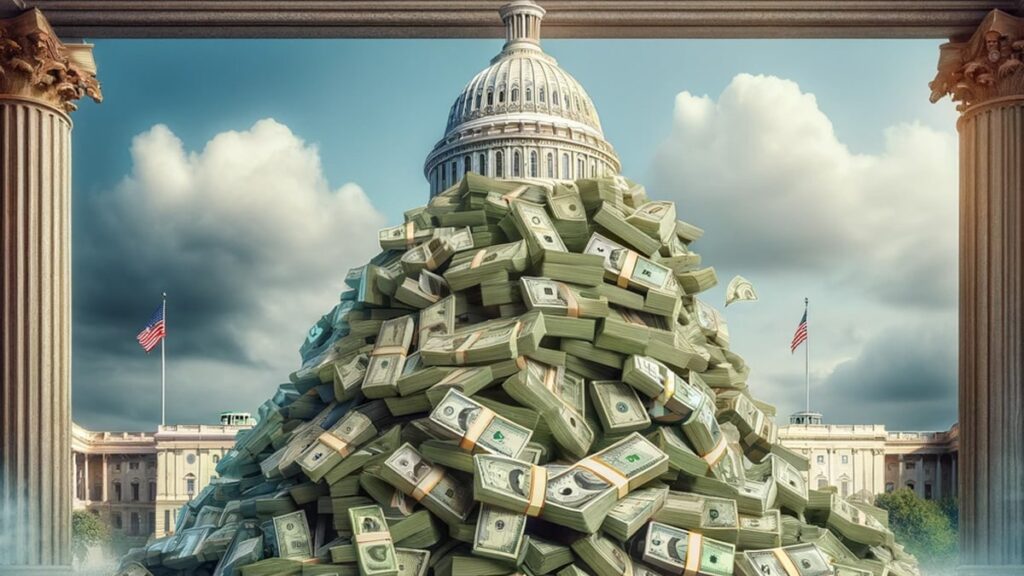
Washington is fully aware of the nation’s unsustainable fiscal trajectory; the CBO report formalizes these widespread concerns into concrete projections. The primary obstacle to charting a corrective path is a lack of political will. As Congressman Schweikert explains, the solution is to “start with telling the truth.”
Too many representatives are making empty promises to address the issue “after the next election,” creating a perpetual cycle of avoidance and delay. Even some of the most vocal proponents of fiscal responsibility focus on symbolic reforms or meaningless cuts, rather than the required overhaul.
Modern Monetary Theory vs. The Gold Standard
The prevailing framework of Modern Monetary Theory (MMT), which treats sovereign debt as a manageable policy tool rather than a binding constraint, has played a central role in enabling the fiscal path the United States finds itself on today. Congressman Schweikert characterized this perspective as a recycled idea, noting that “MMT… isn’t modern. It’s been used [since] pre-Roman times.”
Growing criticism of MMT and its evident risks has led some observers to wonder whether a return to the gold standard is inevitable. While Schweikert does not see a full retethering of the dollar to gold, he suggested the currency could one day be “pegged to a basket of commodities.”
Such a system could impose greater fiscal discipline by limiting money creation. However, he argued it remains unlikely because modern governments rely on monetary flexibility to stabilize markets, respond to crises, and finance persistent deficits.
Fiscal Erosion Is Already Underway
Source: CBS News
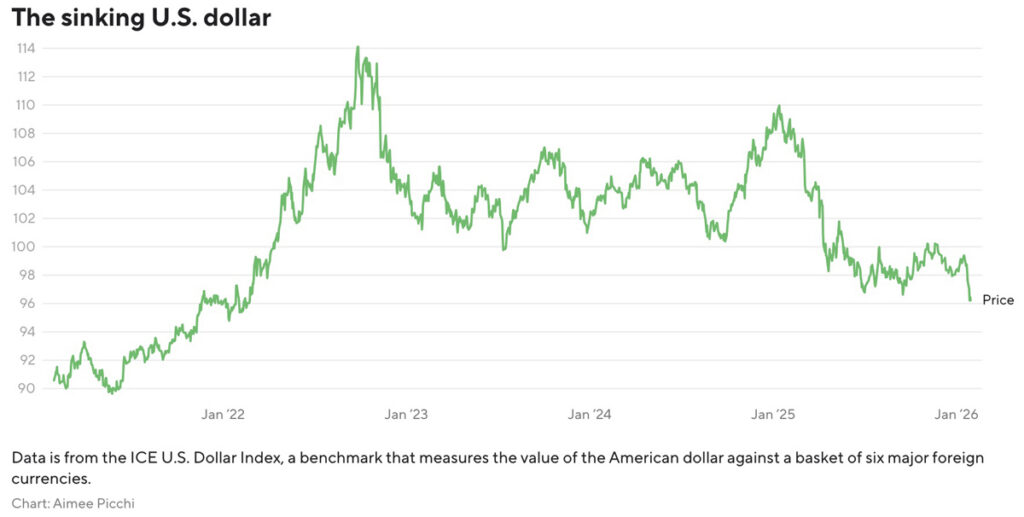
Rather than a sudden economic collapse, Congressman Schweikert warns that the greater danger is a gradual erosion of fiscal stability and global economic dominance. Several indicators suggest the unraveling is already underway:
- The USD recently fell to a four-year low as global trade rifts and geopolitical turmoil weigh on its value.
- The U.S. government has lost its perfect sovereign credit rating from all three major rating agencies.
- Countries around the world are actively pursuing a de-dollarization strategy to limit their reliance on the greenback.
Investors Embrace Gold for Wealth Protection

With many fiscal leaders unwilling to confront the nation’s long-term financial trajectory, investors are already adapting. The traditional 60/40 portfolio — 60% stocks and 40% bonds — is increasingly being reconsidered amid rising debt, inflation risks, and growing uncertainty around currency stability.
In response, some financial institutions and investment strategists are advocating a more diversified approach. A commonly discussed alternative is a 60/20/20 investment strategy, in which the traditional bond portion is split between fixed-income assets and physical gold.
If you’re worried about how the U.S. debt burden could negatively affect your hard-earned savings, learn how precious metals can preserve your wealth. Claim a FREE copy of our Precious Metals Investment Guide.
Related Video: The Gold Spot Overtime

Why David Schweikert Is Running for Arizona Governor and What It Means for the State’s Economic Future
Question or Comments?
If you have any questions about today’s topics or want to see us discuss something specific in a future The Gold Spot episode, please add them here.
CommentPowered by WPeMatico
Questions or Comments?
“*” indicates required fields